







What's Happening?
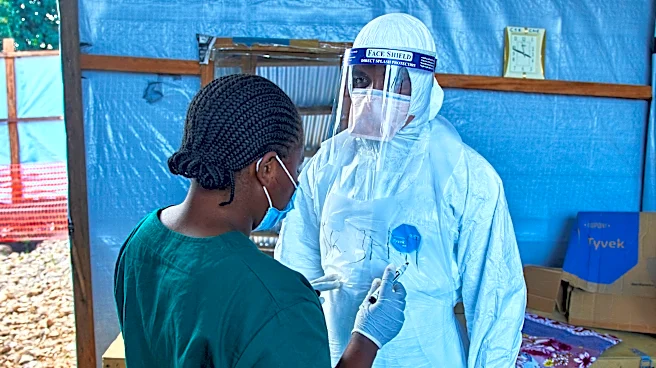
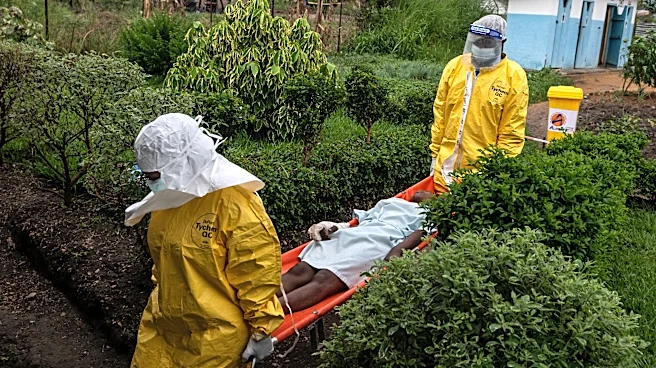
In Congo, health workers at the center of the Ebola outbreak have gone on strike due to delays in their payments, complicating efforts to control the disease's spread. The strike affects Ituri province, the hardest-hit area, where workers have not received
wages or bonuses since the outbreak was declared on May 15. The situation is exacerbated by limited resources and unfair treatment allegations. The strike coincides with the start of clinical trials for a treatment for the Bundibugyo virus, responsible for the outbreak. The World Health Organization reports that the virus continues to spread, with 1,708 cases and 580 deaths recorded.
Why It's Important?
The strike by health workers in Congo highlights the critical challenges faced in managing public health crises, particularly in resource-limited settings. Delays in payments and inadequate support for frontline workers can severely undermine response efforts, risking further spread of the disease. The situation underscores the need for timely financial and logistical support to ensure effective disease control measures. The strike also raises concerns about the safety and well-being of health workers, who face significant risks in their efforts to contain the outbreak. Addressing these issues is crucial to maintaining public trust and ensuring the success of health interventions.
What's Next?
Efforts to resolve the payment issues are underway, with authorities meeting with workers to address their concerns. The outcome of these discussions will be critical in determining the continuation of response efforts. The situation may prompt a reevaluation of resource allocation and support mechanisms for health workers in crisis settings. The international community may also need to step in to provide additional support and resources to ensure the outbreak is contained. The ongoing clinical trials for the Bundibugyo virus treatment will be closely monitored, with potential implications for future outbreak responses.