








What's Happening?
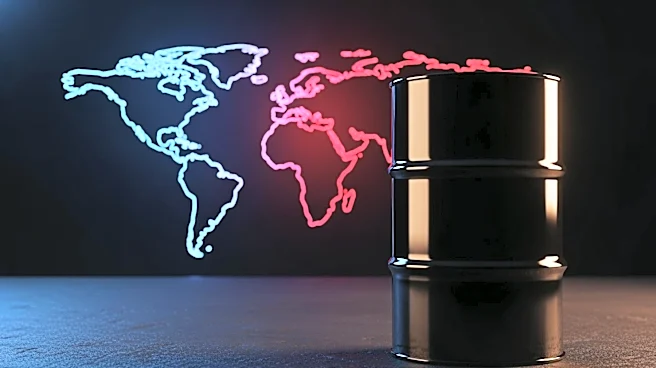
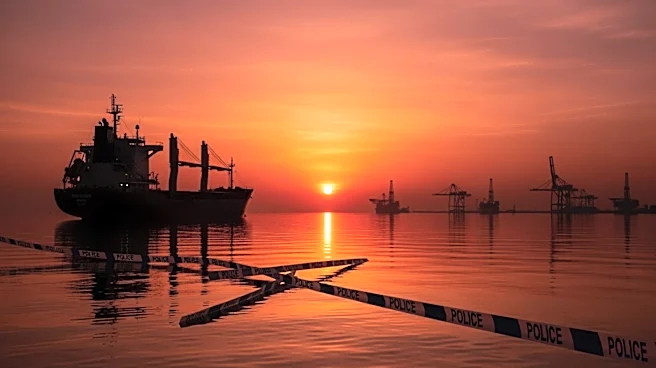
President Trump has engaged in discussions with U.S. oil companies to address the potential impact of a prolonged U.S. blockade of Iran's ports. This development comes as the price of oil, a significant export for Canada, surged nearly 7% to $106.88 per
barrel. The increase in oil prices is attributed to stalled negotiations between the U.S. and Iran, raising concerns about extended disruptions in Middle Eastern oil supply. Concurrently, the U.S. dollar strengthened against a basket of major currencies, as traders speculated that the Federal Reserve would maintain current interest rates. The Bank of Canada, meanwhile, kept its key interest rate steady at 2.25%, but indicated that sustained high oil prices could necessitate consecutive rate hikes to manage inflation.
Why It's Important?
The discussions led by President Trump regarding a potential blockade of Iran's ports highlight the geopolitical tensions affecting global oil markets. The rise in oil prices has significant implications for both the U.S. and Canadian economies, potentially influencing inflation and monetary policy decisions. For Canada, a major oil exporter, the situation could lead to increased revenue but also poses risks of inflationary pressures. The U.S. Federal Reserve's decision to hold interest rates steady reflects a cautious approach amid these uncertainties. The outcome of these geopolitical and economic developments could impact global trade dynamics, energy markets, and financial stability.
What's Next?
If the U.S. proceeds with a blockade of Iran's ports, it could lead to further disruptions in oil supply, potentially driving prices higher. This scenario may prompt the Bank of Canada to adjust its monetary policy, possibly implementing rate hikes to curb inflation. Additionally, the Federal Reserve's future actions will be closely watched as it navigates the economic implications of these geopolitical tensions. Stakeholders in the oil industry, financial markets, and government sectors will need to monitor developments closely to adapt to the evolving situation.