





What's Happening?
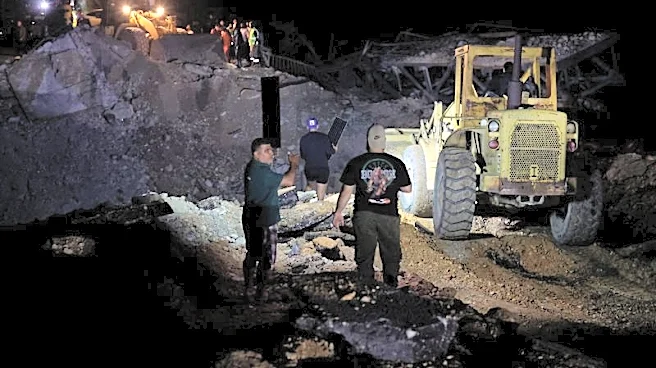
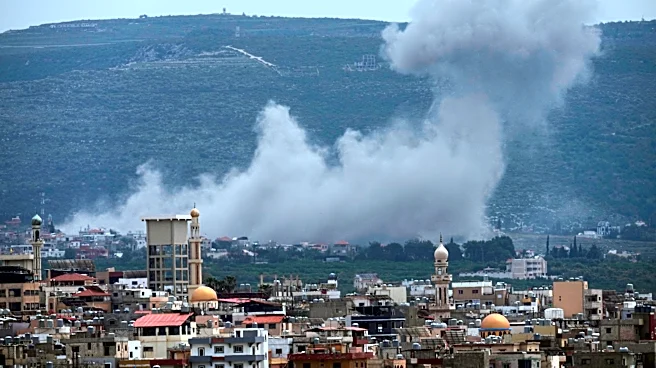
Israel has announced the establishment of a 'yellow line' in southern Lebanon, similar to a measure used in Gaza. This line demarcates areas under Israeli military control and is part of ongoing military operations despite a recent ceasefire. The Israeli military claims
the line is necessary to prevent threats from Hezbollah, which continues to influence the region. The ceasefire, brokered to facilitate negotiations, has seen numerous violations, with Israeli forces continuing attacks in southern Lebanon. The Lebanese government remains uneasy about Hezbollah's influence, and the ceasefire's effectiveness is under scrutiny.
Why It's Important?
The establishment of the 'yellow line' signifies Israel's strategic approach to managing security threats from Hezbollah, reflecting ongoing tensions in the region. This move could further complicate peace efforts and exacerbate regional instability. The continued military actions despite a ceasefire highlight the fragile nature of peace agreements in conflict zones. The situation affects regional security dynamics, with potential implications for international diplomatic efforts and the broader Middle East peace process.
What's Next?
The ceasefire's future remains uncertain, with both sides likely to continue shaping its terms to their advantage. International stakeholders may increase diplomatic efforts to stabilize the region, but the entrenched positions of Israel and Hezbollah pose significant challenges. The Lebanese government may face increased pressure to address Hezbollah's military presence, while Israel may continue its military operations to secure its borders.