










What's Happening?
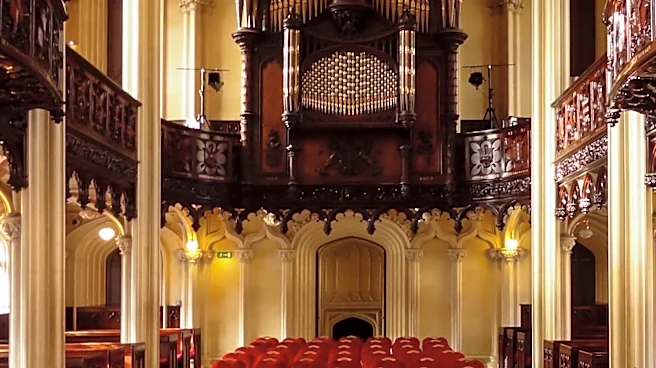
Manifesta 16 Ruhr, a nomadic art biennial, is transforming unused churches in Germany's Ruhr region into cultural and community spaces. The event, which spans four cities—Duisburg, Essen, Gelsenkirchen, and Bochum—aims to repurpose these historical buildings
for public benefit. The initiative includes art installations and community projects, such as a basketball court and a tea garden, to revitalize these spaces. The biennial addresses the socio-political issues of the region, which has seen economic decline and demographic shifts, leading to many churches being abandoned or deconsecrated.
Why It's Important?
This initiative highlights the potential for cultural projects to breathe new life into neglected urban spaces, fostering community engagement and cultural enrichment. By repurposing churches, Manifesta 16 Ruhr not only preserves architectural heritage but also addresses the need for communal spaces in economically disadvantaged areas. This approach could serve as a model for other regions facing similar challenges, demonstrating how art and culture can drive social and economic revitalization.
What's Next?
Following the biennial, local authorities and communities will need to decide on the long-term use of these repurposed churches. The success of Manifesta 16 Ruhr could influence future urban planning and cultural policies, encouraging more projects that integrate art into community development. Stakeholders will likely evaluate the impact of these transformations on local communities and consider how to sustain and expand such initiatives.