



What's Happening?
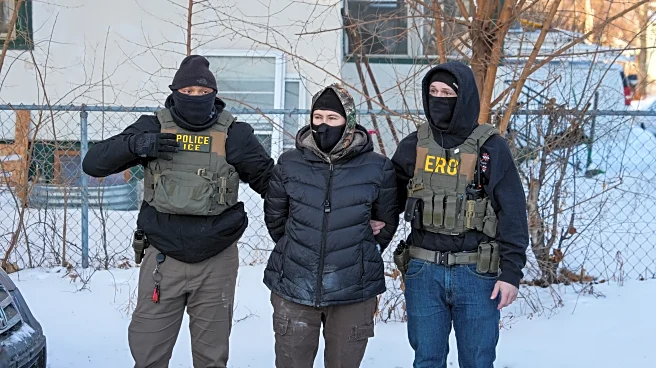
The Cook County State’s Attorney’s office is conducting a legal review of a new executive order issued by Chicago Mayor Brandon Johnson. The order directs the Chicago Police Department (CPD) to investigate potential misconduct by immigration agents. This
move follows advocacy group pressures to hold federal agents accountable for confrontations with civilians during the Trump administration's Operation Midway Blitz. The order has sparked a dispute between Mayor Johnson and Cook County State’s Attorney Eileen O’Neill Burke, who claims her office was not consulted before the order's release. The order mandates CPD supervisors to preserve evidence related to incidents involving immigration agents and to refer felony matters to the State’s Attorney’s office. The involvement of the mayor’s office in such referrals is considered unusual. The State’s Attorney’s office is reviewing the order's legality, as it alters the process for evaluating felony charges.
Why It's Important?
This executive order is significant as it represents a local government’s attempt to assert oversight over federal immigration enforcement activities. The order could impact how immigration enforcement is conducted in Chicago, potentially leading to increased scrutiny of federal agents. This move may also influence public policy by setting a precedent for other cities considering similar actions. The order's legality and its implications for the relationship between local and federal authorities are under scrutiny. The outcome of this review could affect the balance of power between city officials and federal agencies, impacting how immigration laws are enforced and perceived by the public.
What's Next?
The Cook County State’s Attorney’s office will continue its legal review of the executive order. The Chicago Police Department has a month to comply with the order, but as of now, no changes have been communicated to officers. The Fraternal Order of Police, representing CPD officers, has expressed concerns about the legal implications for its members. The outcome of the legal review and the response from law enforcement agencies will be crucial in determining the order's implementation and its broader impact on immigration enforcement in Chicago.