



What's Happening?
Médecins Sans Frontières (MSF), also known as Doctors Without Borders, has expanded its mobile clinic activities in Hebron, focusing on mental health support for individuals affected by intentional violence. This expansion comes as Palestinians in the
West Bank face increasing attacks from Israeli settlers and armed forces, leading to significant barriers in accessing basic healthcare due to restrictions, insecurity, and systematic violence. Between January and July, MSF teams provided over 1,930 individual mental health consultations and conducted 436 group therapy sessions. The organization also responded to nearly 170 alerts for incidents such as home demolitions, injuries, or attacks on water and sanitation systems, providing rapid responses that included mental health support and essential item donations. The escalating violence, coupled with movement restrictions and a collapsing healthcare system, has severely impacted both the physical and mental well-being of the population in Hebron.
Why It's Important?
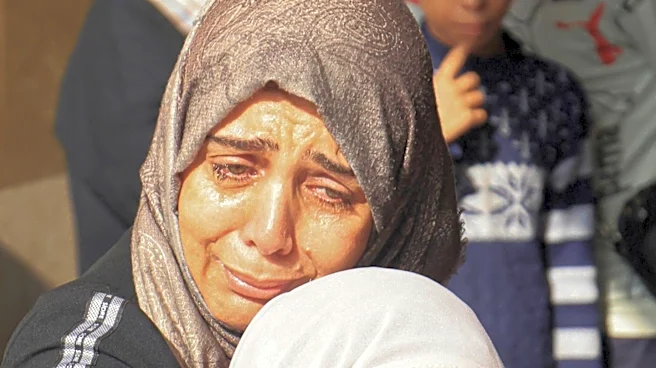
The expansion of MSF's mental health services in Hebron highlights a critical humanitarian crisis where ongoing violence and systemic barriers are severely undermining public health. The inability of Palestinians to access essential healthcare, including mental health services, due to conflict and restrictions, underscores a profound violation of human rights and international humanitarian law. The reported increase in psychological consultations driven by intentional violence, rising from 13% to between 17% and 38% since March, indicates a worsening mental health crisis. Furthermore, the impact on the healthcare system, including a shortage of workers and medicines due to withheld tax revenues from the Palestinian Authority, creates a cascading effect, leaving vulnerable populations without necessary medical attention. This situation not only exacerbates suffering but also destabilizes the region, potentially leading to long-term societal trauma and health disparities.
What's Next?
MSF continues to face significant operational constraints, including daily uncertainty about reaching clinics due to closures and changing conditions. The organization calls on Israeli authorities to cease measures that displace Palestinians, ensure unhindered access to healthcare and humanitarian aid, protect civilians, and adhere to international law. The ongoing challenges suggest that the demand for MSF's services will likely persist, and potentially increase, as the conflict and restrictions continue. The long-term implications for the mental and physical health of the affected population remain a significant concern, necessitating sustained humanitarian intervention and advocacy for policy changes that prioritize civilian protection and access to essential services. The effectiveness of MSF's expanded services will depend on their ability to navigate these complex and volatile conditions.
Beyond the Headlines
The situation in Hebron, as described by MSF, reveals deeper ethical and legal implications concerning the protection of civilians in conflict zones and the responsibilities of occupying powers. The systematic nature of violence and movement restrictions points to a broader pattern of human rights abuses that extend beyond immediate physical harm to include psychological trauma and the erosion of basic societal functions. The challenges faced by MSF, an independent medical humanitarian organization, in delivering aid underscore the politicization of humanitarian assistance and the difficulties in upholding medical neutrality in highly contested environments. The long-term psychological impact on individuals and communities, particularly children, exposed to chronic violence and insecurity, could lead to intergenerational trauma, affecting social cohesion and future stability. This scenario highlights the urgent need for international accountability and adherence to humanitarian principles to prevent further deterioration of human dignity and well-being.