






What's Happening?
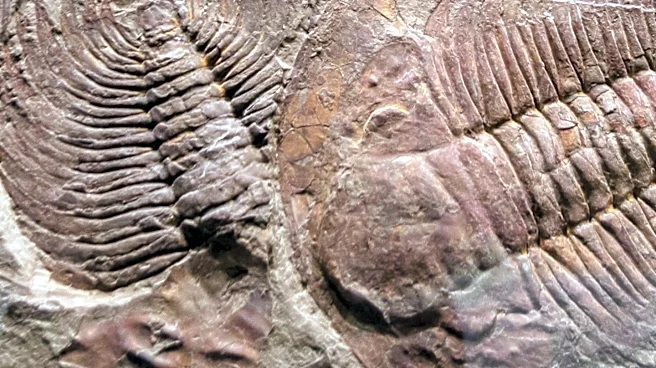
A fossil of Austronaga minuta, a marine reptile from the Triassic Period, has been discovered in Yunnan province, China. This 245-million-year-old specimen is notable for its exceptionally preserved internal organs, including the stomach, liver, and intestines.
The fossil provides a rare glimpse into the anatomy of ancient marine predators, showing that the basic structure of the reptilian digestive system has remained largely unchanged over millions of years. The discovery highlights the diversity of archosaurs during the Triassic, a group that includes dinosaurs, birds, and crocodiles.
Why It's Important?
The preservation of internal organs in such an ancient fossil is a significant scientific breakthrough, offering insights into the evolutionary history of marine reptiles. This discovery enhances our understanding of the anatomy and lifestyle of early marine predators, contributing to the broader knowledge of reptilian evolution. The fossil's condition allows researchers to study the evolutionary adaptations that enabled these creatures to thrive in marine environments, providing a clearer picture of the biodiversity during the Triassic Period.