




What's Happening?
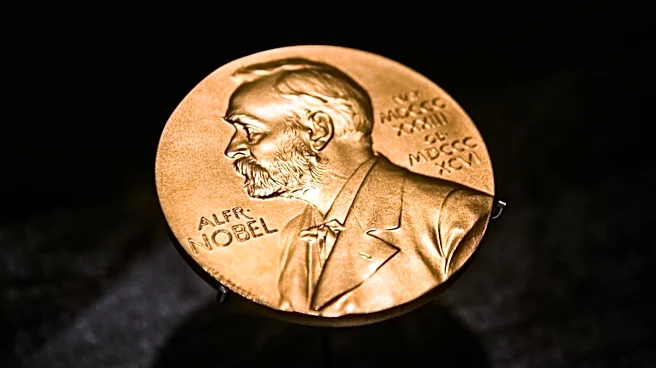
On October 13, 2016, Bob Dylan was announced as the recipient of the Nobel Prize in Literature. This recognition marked a significant moment in the history of the prestigious award, as it honored a musician and songwriter for his lyrical contributions
to American culture and beyond. The announcement highlighted Dylan's profound impact on music and literature, acknowledging his ability to create poetic expressions within the framework of popular song. The Nobel Prize in Literature is awarded annually to an author from any country who has produced "the most outstanding work in an ideal direction." Dylan's selection sparked considerable discussion and debate regarding the definition and boundaries of literature, bringing the world of music into the esteemed literary sphere. His win was a testament to the evolving understanding of artistic merit and cultural influence.
Why It's Important?
Bob Dylan's Nobel Prize in Literature is important because it challenged traditional notions of literary achievement and expanded the scope of what is considered high art. By recognizing a songwriter, the Swedish Academy acknowledged the literary depth and cultural significance of popular music, particularly in the American context. This decision had a ripple effect, prompting a re-evaluation of song lyrics as a legitimate form of poetry and storytelling. It underscored the idea that profound artistic expression can transcend conventional categories and reach a broad audience through various mediums. For the music industry, it elevated the status of songwriting, potentially inspiring future generations of artists to pursue lyrical excellence with renewed vigor. For the literary world, it sparked conversations about accessibility, relevance, and the evolving nature of storytelling in the modern age, demonstrating that impactful narratives can emerge from diverse creative fields.
What's Next?
Following Bob Dylan's Nobel Prize win, the ongoing discussion about the intersection of music and literature is likely to continue. Future Nobel committees may be more open to considering artists from non-traditional literary backgrounds, potentially broadening the range of recipients for the prestigious award. This could lead to increased academic study and critical analysis of song lyrics and other forms of popular culture as legitimate literary texts. For Dylan himself, the award further cemented his legacy as a cultural icon and a master wordsmith, ensuring his work will be examined through both musical and literary lenses for generations to come. The precedent set by his win could also encourage other artistic institutions to reconsider their criteria for recognizing excellence, fostering a more inclusive approach to defining and celebrating creative achievements across different disciplines.
Beyond the Headlines
Beyond the immediate recognition, Bob Dylan's Nobel Prize win carries deeper implications for how society values and categorizes artistic expression. It highlights the artificiality of rigid boundaries between art forms, suggesting that true creativity often blurs these lines. The award implicitly argues that the power of language and narrative is not confined to printed books but can thrive in diverse mediums, including music. This challenges the hierarchical structures often present in cultural institutions, where certain art forms are deemed more 'intellectual' or 'worthy' than others. Dylan's work, deeply rooted in American folk traditions and protest movements, demonstrates how art can be both profoundly personal and universally resonant, speaking to the human condition across different social and political landscapes. His recognition encourages a more holistic appreciation of culture, where impact and innovation are prioritized over conventional classifications.