





What's Happening?
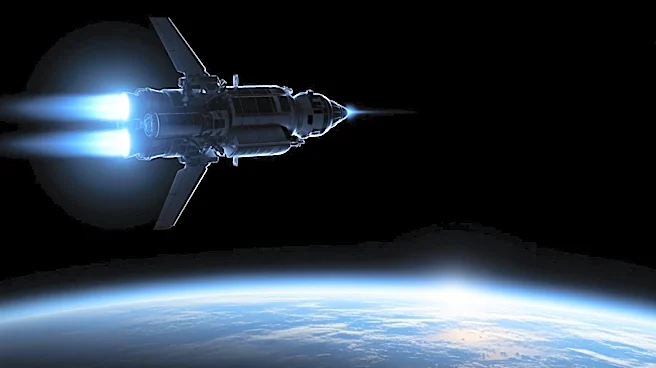
The Artemis II mission, which involves the Orion spacecraft traveling to the Moon, has encountered a minor issue with its onboard toilet system. Shortly after the mission began, the crew discovered that the toilet's pump was not functioning due to insufficient
water used to prime it. This issue was quickly resolved by adding more water, allowing the pump to operate correctly. However, a new problem arose when urine collected in a small onboard tank froze, preventing it from being vented into space. To address this, mission controllers adjusted the spacecraft's orientation to maximize sunlight exposure on the urine tank, partially resolving the issue. Despite these challenges, the mission is proceeding smoothly, with the spacecraft now closer to the Moon than Earth.
Why It's Important?
The minor technical issues faced by the Artemis II mission highlight the ongoing challenges of space travel, particularly in maintaining life-support systems in a microgravity environment. The successful resolution of these issues demonstrates the resilience and adaptability of mission controllers and the crew. This mission is a critical step in NASA's Artemis program, which aims to return humans to the Moon and eventually establish a sustainable presence there. The ability to manage and overcome such technical difficulties is essential for the success of future deep space missions, including those targeting Mars. The mission's progress also serves as a testament to the advancements in space technology and the importance of thorough testing and preparation.
What's Next?
As the Artemis II mission continues, the crew and mission controllers will remain vigilant in monitoring the spacecraft's systems to ensure a successful journey to the Moon and back. The resolution of the toilet malfunction will likely lead to further evaluations and potential design improvements for future missions. NASA will continue to gather data and insights from this mission to inform the development of the Artemis program and its goal of establishing a long-term human presence on the Moon. The mission's outcomes will also contribute to the planning and execution of subsequent Artemis missions, including the anticipated Artemis III mission, which aims to land astronauts on the lunar surface.