







What's Happening?
In 2024, Ulong Island in the Republic of Palau underwent a significant ecological restoration effort with the removal of invasive rats. This initiative, part of the Island-Ocean Connection Challenge (IOCC), aimed to restore the island's natural ecosystem
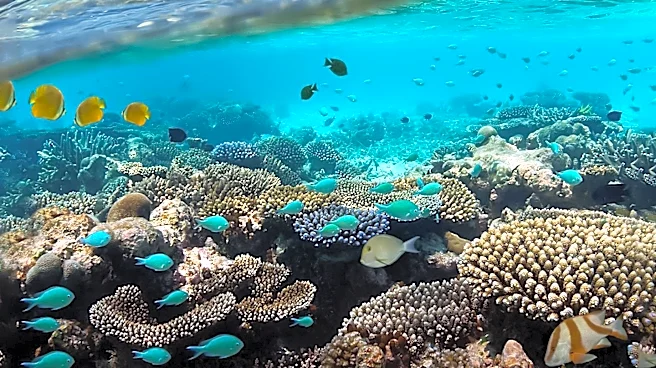
by allowing seabirds to return. Researchers from Island Conservation and the Scripps Institution of Oceanography at the University of California San Diego monitored the island's ecological changes before and after the rat removal. The study revealed that the return of seabirds has led to a remarkable recovery of the island's coral reefs and marine life. Seabirds, which feed in the ocean and nest on land, bring nutrients from the sea to the island through their droppings. These nutrients, carried by rainwater into coastal waters, have significantly boosted the local marine ecosystem. The study recorded a 183% increase in fish biomass and an 80% rise in leaf nitrogen at one reef site, indicating a rapid ecological recovery.
Why It's Important?
The restoration of Ulong Island highlights the critical role of seabirds in maintaining healthy island and marine ecosystems. By removing invasive rats, the project has demonstrated how terrestrial restoration can have immediate and positive effects on marine environments. This is particularly significant for island nations like Palau, where local communities rely heavily on marine resources for their livelihoods. The findings provide a model for similar conservation efforts worldwide, showcasing the interconnectedness of land and sea ecosystems. The rapid recovery observed on Ulong Island underscores the potential for ecological restoration to enhance biodiversity and support sustainable resource management, offering hope for other regions facing similar ecological challenges.
What's Next?
The success of the Ulong Island project may encourage further conservation efforts in Palau and other island nations. Researchers and conservationists are likely to advocate for similar rat removal initiatives on other islands to replicate the positive outcomes seen on Ulong. Additionally, the study's findings could influence policy decisions regarding invasive species management and ecosystem restoration strategies. Continued monitoring of Ulong Island will be essential to understand the long-term impacts of the restoration and to refine conservation techniques. The project may also inspire international collaboration and funding for ecological restoration projects, emphasizing the importance of preserving biodiversity and supporting sustainable development.
Beyond the Headlines
The Ulong Island restoration project highlights the broader implications of invasive species management and ecosystem restoration. It raises awareness about the ecological and economic benefits of restoring natural habitats, particularly in regions where human activities have disrupted ecological balance. The project also emphasizes the importance of integrating scientific research with local conservation efforts, demonstrating how community involvement and scientific expertise can drive successful environmental initiatives. Furthermore, the study contributes to the growing body of evidence supporting the role of biodiversity in enhancing ecosystem resilience, which is crucial in the face of global environmental challenges such as climate change.