


What's Happening?
President Trump has consistently pursued a policy of withdrawing the United States from various international organizations and agreements, a strategy that has significantly altered the global power dynamics. Notable withdrawals include the Trans-Pacific
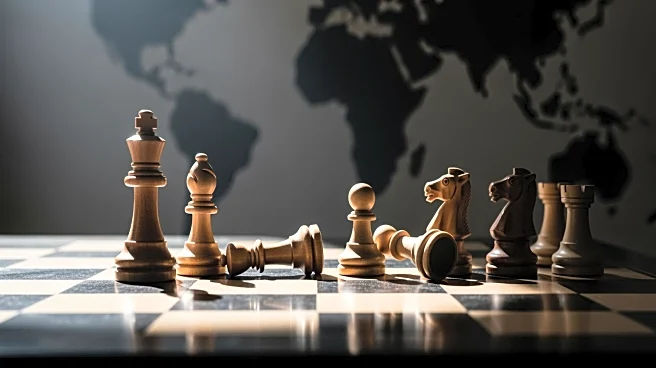
Partnership, the Paris climate agreement, UNESCO, and the World Health Organization. These moves are justified by the administration as necessary to protect American sovereignty and reduce costs, but they have also created vacuums that other nations, particularly China and the European Union, are eager to fill. This shift marks a departure from the post-World War II international order where the U.S. played a central role in shaping global norms and standards.
Why It's Important?
The withdrawal from these international bodies has profound implications for global governance and U.S. influence. By stepping back from multilateral frameworks, the U.S. reduces its ability to shape international policies and standards, potentially allowing other countries to set agendas that may not align with American values. This could lead to increased geopolitical competition and a shift in the balance of power, with China and the EU gaining more influence. Additionally, the absence of U.S. leadership in areas like climate change and health could undermine global efforts to address these critical issues, affecting international cooperation and trust.
What's Next?
With President Trump's return to office, the administration has signaled further withdrawals from international organizations, including major climate frameworks and UN agencies. This continued disengagement suggests a long-term shift in U.S. foreign policy towards unilateralism. The international community may respond by strengthening regional coalitions and seeking new alliances to fill the void left by the U.S. This could lead to a more fragmented global order, with varying standards and norms across different regions.
Beyond the Headlines
The broader implications of these withdrawals extend beyond immediate geopolitical shifts. They reflect a deeper ideological stance against multilateralism and global governance, aligning with domestic political narratives that criticize global elites and expert-driven policies. This approach may resonate with certain voter bases but risks isolating the U.S. from collaborative efforts that require shared commitments and long-term engagement. The challenge will be balancing national interests with the need for international cooperation in addressing global challenges.