






What's Happening?
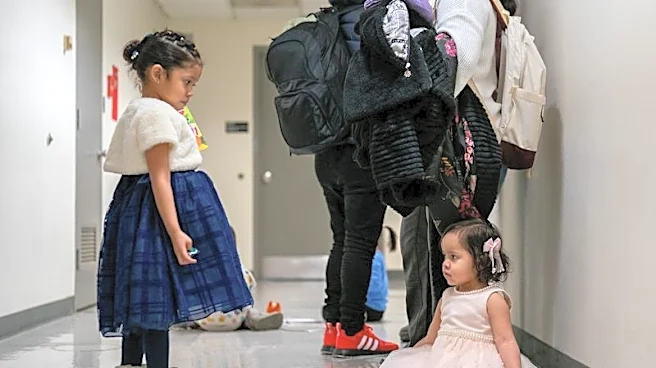
During President Trump's second term, the U.S. has expanded its deportation policy to include third-country removals, sending migrants to countries where they have no ties. This policy has led to deportees being held in prisons and shelters in over two
dozen countries, often with poor human rights records. Critics argue that this practice outsources detention to foreign governments, potentially exposing deportees to human rights abuses. The policy has been criticized for lacking transparency and legal protections for deportees. Human Rights Watch has highlighted the risks of arbitrary detention and ill-treatment under these agreements.
Why It's Important?
The third-country deportation policy represents a significant shift in U.S. immigration enforcement, with potential implications for international relations and human rights. By sending deportees to countries with questionable human rights records, the U.S. risks damaging its global reputation and credibility. The policy also raises ethical concerns about the treatment of migrants and the responsibilities of the U.S. government in ensuring their safety. The high costs associated with these deportations, as reported by Senator Jeanne Shaheen, further complicate the policy's justification and sustainability.
What's Next?
Legal challenges to the third-country deportation policy are ongoing, with a Massachusetts federal judge ruling it illegal, though the decision is currently under appeal. The outcome of these legal proceedings could determine the future of the policy. Additionally, international scrutiny and pressure from human rights organizations may influence the U.S. to reconsider or modify its approach. The policy's impact on U.S. relations with the countries involved in these agreements will also be closely monitored.