

What's Happening?
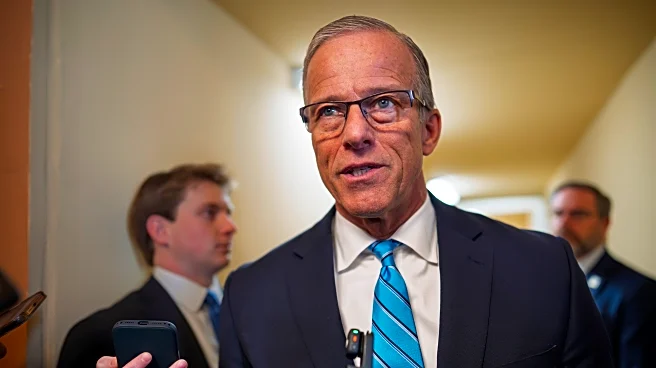
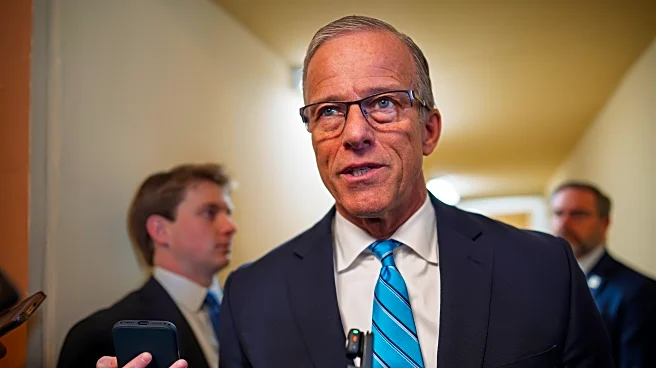
Senate Republicans have proposed a deal to end the partial shutdown of the Department of Homeland Security (DHS), but President Trump has expressed dissatisfaction with the plan. The proposal, which emerged after discussions between Senate Republicans and President Trump,
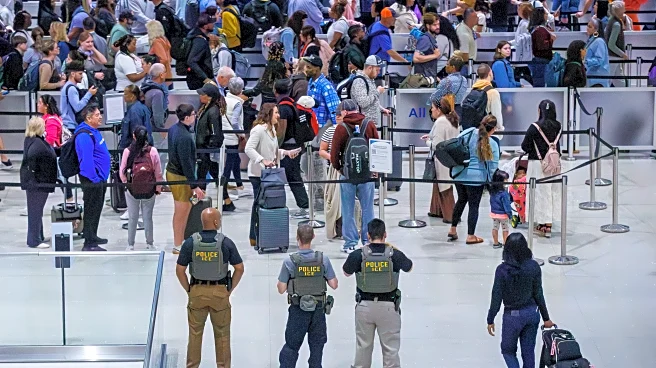
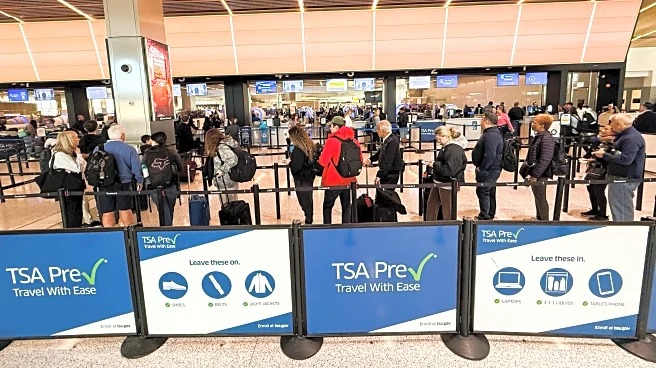
aims to fund 94% of the DHS budget while withholding $5.5 billion for ICE's deportation arm. Despite initial optimism from Senate Republicans, President Trump has stated he is 'pretty much not happy' with any deal made, complicating efforts to reach a resolution. The proposal also faces opposition from Democrats, who demand reforms to ICE following recent incidents involving federal agents. The shutdown, now in its 40th day, has led to significant disruptions, including long TSA lines at airports and DHS employees working without pay.
Why It's Important?
The ongoing DHS shutdown has significant implications for national security and public safety, as it affects the operations of key agencies like TSA, FEMA, and the Coast Guard. The deadlock also highlights the broader political struggle over immigration policy, particularly the contentious role of ICE. The shutdown's impact is felt by approximately 250,000 DHS employees, many of whom are working without pay, leading to increased absenteeism and operational challenges. The situation underscores the deep partisan divide in Congress, with Republicans and Democrats unable to agree on funding priorities and immigration reforms. The outcome of these negotiations could set a precedent for future budgetary and policy disputes, affecting the legislative process and governance.
What's Next?
The proposed funding deal must still pass both the Senate and the House, where it faces potential hurdles. Senate Republicans may attempt to use the reconciliation process to pass parts of the SAVE America Act, a priority for President Trump, though this approach is met with skepticism within the party. Democrats, led by Senate Minority Leader Chuck Schumer, are expected to demand more concessions, particularly regarding ICE reforms. The shutdown's resolution remains uncertain, with potential delays extending into April. The ongoing negotiations will test the ability of Congress to navigate complex policy issues and reach bipartisan agreements.