
What's Happening?
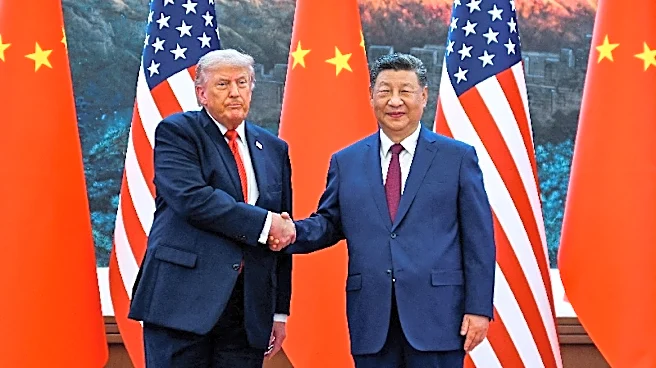
The United States and China have reached an agreement for China to purchase at least $17 billion worth of U.S. agricultural products annually through 2028. This agreement was announced following a summit
between President Trump and Chinese President Xi Jinping in Beijing. The two nations also plan to establish trade and investment boards as part of this agreement. While the U.S. Trade Representative Jamieson Greer indicated that the U.S. could elevate tariffs, President Trump stated that tariffs were not discussed during his meetings with Xi Jinping. The Chinese Ministry of Commerce confirmed that both countries agreed to mutually reduce levies on certain products, although specific details are still under negotiation.
Why It's Important?
This development is significant as it represents a potential easing of trade tensions between the world's two largest economies. The agreement on agricultural purchases is particularly important for U.S. farmers, who have been adversely affected by the trade war. The establishment of trade and investment boards could lead to more structured and stable economic relations between the U.S. and China. However, the lack of discussion on tariffs during the summit suggests that tariff-related tensions may persist, impacting various sectors reliant on international trade. The ongoing negotiations and the potential for tariff adjustments could influence global markets and economic policies.
What's Next?
Negotiations between the U.S. and China are expected to continue as both sides work out the specifics of the tariff reductions and other trade measures. The establishment of the trade and investment boards will likely involve further discussions on how to optimize trade relations. Stakeholders, including U.S. agricultural producers and international trade partners, will be closely monitoring these developments. The potential for future tariff adjustments remains, which could affect global supply chains and economic strategies.
Beyond the Headlines
The agreement highlights the complex nature of U.S.-China relations, where economic cooperation is intertwined with geopolitical tensions. The mention of Taiwan during the summit underscores the broader strategic considerations that both nations must navigate. The use of terms like 'constructive strategic stability' suggests a cautious approach to maintaining balance in bilateral relations. This agreement could set a precedent for future negotiations, influencing how both countries address trade and political issues.