
What's Happening?
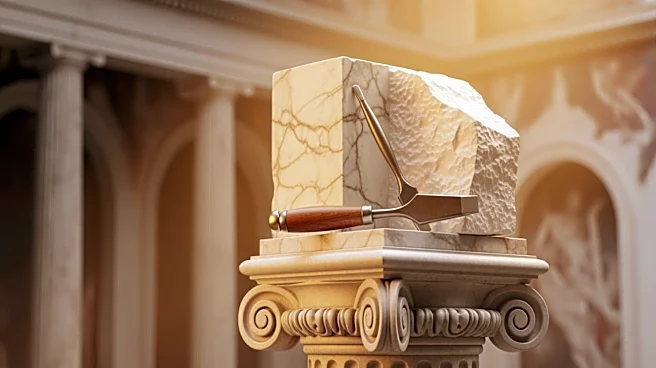
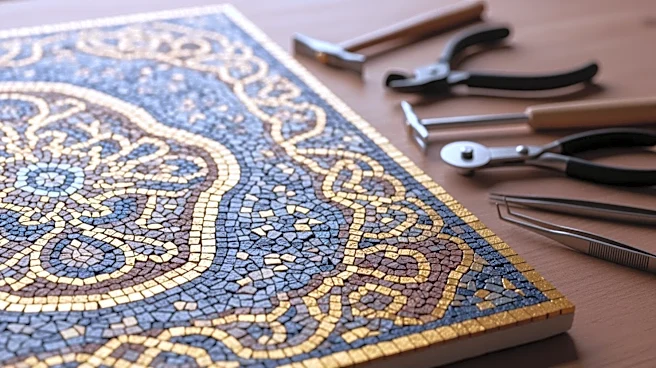
The Vatican's Mosaic Studio, known as Studio del Mosaico, continues to employ ancient techniques and tools to restore and create mosaics, a practice that dates back centuries. The studio, located within St. Peter's Basilica, uses traditional methods such
as the martellina, a sharp hammer, to cut mosaic pieces into tiny fragments. These mosaics, made of glass and gold, are favored for their durability over paintings, which are more susceptible to damage over time. The studio's work includes creating intricate portraits of popes and other significant religious figures, which are then installed in various locations, including St. Paul's outside the walls in Rome. The mosaics are crafted with such precision that they resemble Impressionist paintings, despite being created long before the Impressionist movement. The studio's director, Paolo di Buono, highlights the timeless nature of the colors and techniques used, which have been preserved for generations.
Why It's Important?
The Vatican's Mosaic Studio plays a crucial role in preserving cultural and religious heritage through its meticulous restoration and creation of mosaics. These artworks are not only significant for their aesthetic value but also for their historical and religious importance. By maintaining traditional techniques, the studio ensures that these cultural artifacts remain intact for future generations. The durability of mosaics makes them an ideal medium for preserving religious iconography, which is central to the Vatican's identity and influence. Additionally, the studio's work serves as a testament to the enduring legacy of ancient art forms and their relevance in contemporary times. The mosaics also hold diplomatic significance, as they are often presented as gifts to visiting dignitaries, including U.S. presidents, symbolizing the Vatican's cultural diplomacy.