
What's Happening?
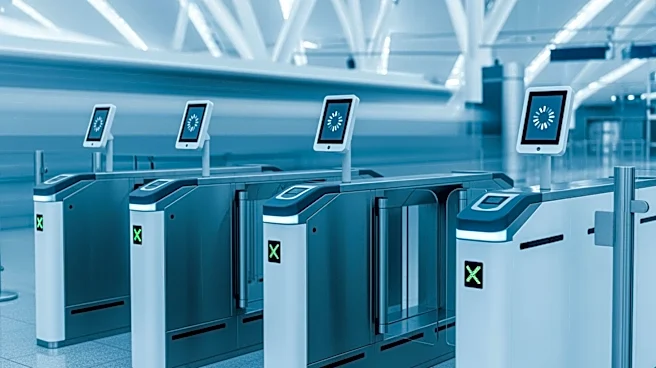
The European Union has fully implemented a biometric Entry/Exit System (EES) at all Schengen Area border crossings, replacing manual passport stamps with face and fingerprint scans. This digital system
aims to enhance security and streamline border crossings for non-EU nationals. However, the transition has led to significant delays at airport customs, with reports of travelers missing flights due to long waits. The World Travel & Tourism Council (WTTC) has expressed concerns that these delays could deter travelers from visiting Europe.
Why It's Important?
The implementation of the EES is crucial for improving border security and efficiency in the EU. However, the reported delays could have economic implications, potentially reducing tourism revenue. The WTTC estimates that persistent delays could result in a loss of up to 41 million visitor arrivals and $45.4 billion in spending. This situation highlights the need for effective communication and operational readiness to ensure a smooth transition to the new system.
What's Next?
Efforts to address the 'teething problems' of the EES are expected, with stakeholders working to improve traveler communication and operational efficiency. The WTTC suggests using digital pre-registration tools and enhancing border crossing operations to reduce delays. The EU may also consider feedback from travelers and industry experts to refine the system and minimize disruptions.