






What's Happening?
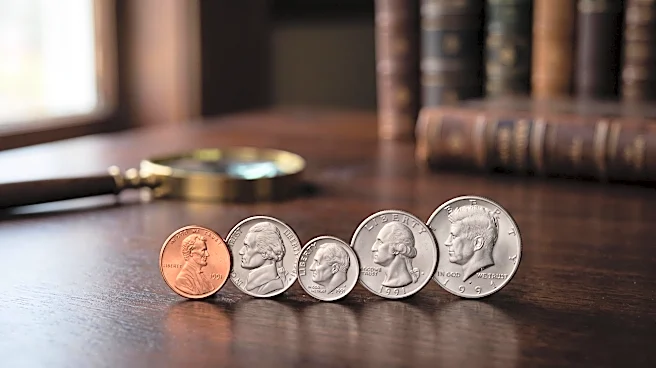
The 1991 United States Mint set, consisting of 10 coins, represents the 32nd year of issue for the official 'Uncirculated' Mint sets. These sets were introduced in 1947 to provide coin collectors with access to all denominations and mints released into
circulation annually for each coinage issue. Unlike Proof Sets, the coins in these uncirculated sets are intended for circulation. The 1991 set includes the Cent, Nickel, Dime, Quarter, and Half Dollar, with all coins struck at both the Philadelphia and Denver Mints. The 1991 set ranks 19th in mintage, with a total of 1,352,101 sets produced. Historically, uncirculated sets sold by the U.S. Mint from 1947 to 1958 contained two examples of each regular issue coin and were packaged in cardboard holders without protective seals. Since 1959, the sets have been sealed in protective plastic envelopes. No official U.S. Mint sets were issued in 1950, 1982, and 1983.
Why It's Important?
The U.S. Mint's uncirculated sets play a crucial role in numismatics and historical preservation. They offer collectors a snapshot of the coinage produced in a given year, providing examples of coins in their original, uncirculated condition. This is important for understanding the quality and design standards of the Mint's output. For historians and researchers, these sets serve as tangible records of economic activity and artistic trends in coinage. The consistent issuance of these sets, with only a few exceptions, demonstrates the Mint's commitment to documenting its production for future generations. The mintage figures, such as the 1991 set ranking 19th, provide insights into the demand for collector items and the Mint's production capacities during different periods. The evolution of packaging, from cardboard to sealed plastic, also reflects advancements in coin preservation and presentation.
What's Next?
The U.S. Mint continues to issue annual uncirculated sets, maintaining the tradition established in 1947. Collectors can anticipate future releases that will document the ongoing production of U.S. coinage. The market for these sets remains active, with collectors seeking to complete their collections or acquire specific years. The Mint may also explore new packaging or presentation methods to enhance the appeal and preservation of these sets. Furthermore, the historical data provided by these sets will continue to be a valuable resource for numismatic studies, allowing for analysis of mintage trends, coin designs, and the overall history of U.S. currency. The ongoing interest in these sets ensures their continued relevance in the collecting community and as historical artifacts.
Beyond the Headlines
The practice of issuing uncirculated coin sets reflects a broader cultural appreciation for currency beyond its transactional value. It transforms everyday money into collectible art and historical artifacts. This tradition fosters a connection between citizens and their national heritage, as each coin tells a story of its time. The meticulous preservation of these coins in sets allows for a deeper understanding of the technological and artistic capabilities of the U.S. Mint over decades. Moreover, the act of collecting itself can be seen as a form of citizen engagement with national institutions, promoting an understanding of governmental functions and historical events through a tangible medium. The consistent demand for these sets underscores a societal value placed on tangible history and the art of coinage.