




What's Happening?
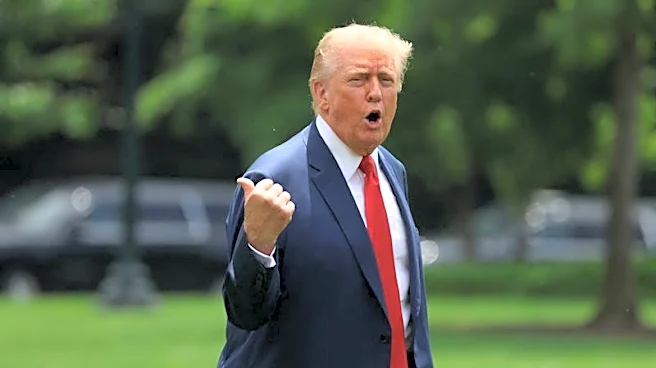
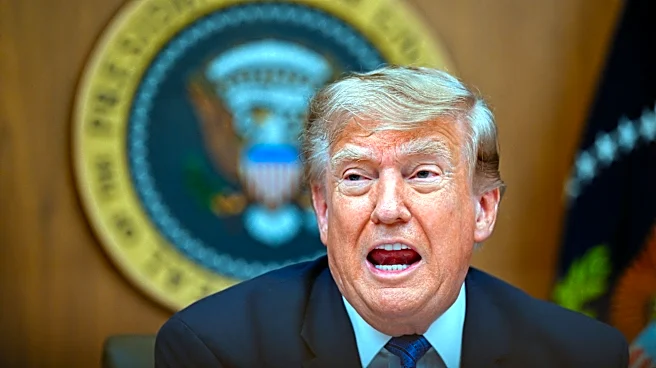
President Trump has been using increasingly violent and authoritarian language in his public addresses, drawing comparisons to historical strongmen like Rodrigo Duterte and Jair Bolsonaro. Recently, during a Fox News interview, Trump used explicit language to describe
his approach to renewed hostilities with Iran, stating intentions to 'beat the fucking shit out of them.' This rhetoric is part of a broader pattern where Trump dispenses with traditional political civility to project an image of toughness. His language and actions, such as mandating changes to museum exhibits to align with his views, have raised alarms about his authoritarian tendencies and the potential erosion of democratic norms.
Why It's Important?
The use of violent and authoritarian rhetoric by a sitting U.S. president has significant implications for the country's democratic institutions and international standing. Such language can undermine public trust in democratic processes and embolden similar rhetoric and actions by other political figures. It also risks alienating allies and escalating international conflicts, as seen in the context of U.S.-Iran relations. Domestically, this approach may deepen political polarization and contribute to a climate of fear and division. The potential normalization of such rhetoric could have long-term impacts on political discourse and governance in the United States.
What's Next?
As President Trump continues to employ this rhetoric, it is likely to provoke reactions from both domestic and international stakeholders. Political opponents and civil society groups may increase their efforts to counteract what they perceive as threats to democratic norms. Internationally, allies may express concern over the U.S.'s approach to foreign policy under Trump's leadership. The upcoming elections could serve as a referendum on Trump's leadership style and policies, potentially influencing the future direction of U.S. politics.
Beyond the Headlines
The deeper implications of President Trump's rhetoric include potential shifts in cultural and ethical norms within the U.S. political landscape. The acceptance or rejection of such language by the public and political institutions could signal broader changes in societal values and the boundaries of acceptable political behavior. Additionally, the focus on authoritarian rhetoric may distract from substantive policy discussions and hinder efforts to address pressing issues such as economic inequality and climate change.