





What's Happening?
Recent advancements in generative AI have significantly impacted the field of biometric authentication, making it easier for attackers to impersonate users without needing to steal credentials or compromise infrastructure. The use of synthetic video,
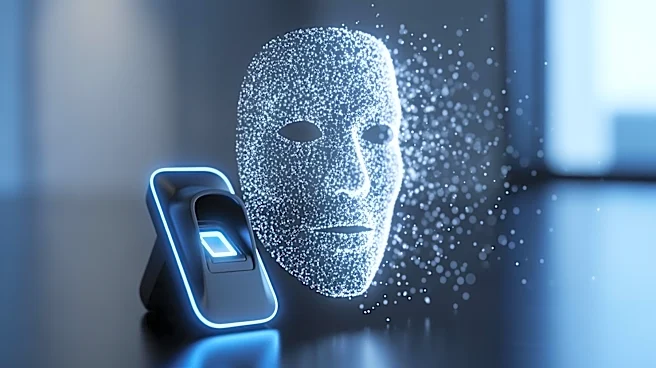
cloned voices, and high-quality biometric spoofs has increased, allowing identity-based attacks to become faster, cheaper, and more convincing. The World Economic Forum has highlighted the accessibility of tools that can copy voices, images, or videos with minimal technical skill, leading to a sharp rise in such attacks. Biometric systems, often seen as a solution, are vulnerable without liveness detection, which verifies that the biometric data comes from a live human interaction. Various attack techniques, such as presentation attacks, replay attacks, and deepfake impersonations, exploit these vulnerabilities. Liveness detection aims to counter these by analyzing depth, movement, and requiring real-time interaction, making it harder for attackers to pass off fake inputs as genuine.
Why It's Important?
The rise in AI-driven biometric spoofing poses significant security risks across various sectors, particularly those relying on biometric authentication for secure access. As these attacks become more sophisticated, they threaten the integrity of systems that depend on biometric verification, such as financial services, government agencies, and personal devices. The potential for large-scale identity theft and unauthorized access to sensitive information could have severe economic and social consequences. Organizations must invest in advanced security measures, including liveness detection, to protect against these evolving threats. The increasing accessibility of AI tools for malicious purposes underscores the need for continuous innovation in cybersecurity defenses to safeguard personal and organizational data.