




What's Happening?
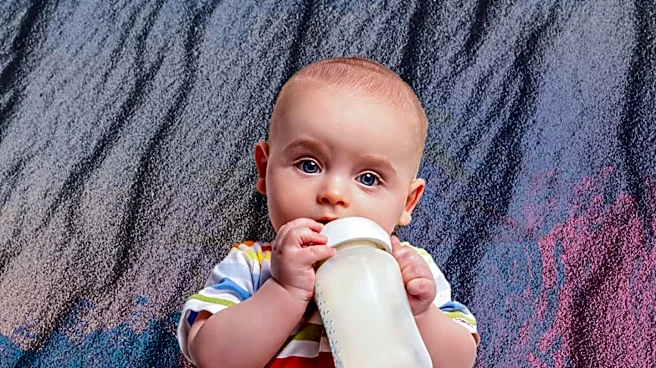
PremieHealth, a Melbourne-based biotech company, is researching the unique properties of marsupial milk to develop advanced nutritional solutions for premature babies. Founders Professor Kevin Nicholas and Associate Professor Julie Sharp discovered that
marsupial milk changes its composition as joeys develop, delivering specific biological signals that guide organ development. Human premature babies, born before these signals are fully received in the womb, often face lifelong health issues. PremieHealth aims to decode these developmental secrets from marsupial milk to create fortifiers that can mimic these crucial signals. The company has built a proprietary database of 105 bioactive compounds from various marsupial species, tracking lactation across their cycles to understand how these bioactives relate to development. Their initial product will be a precision-fermented fortifier based on human breast milk proteins, with marsupial-inspired bioactives to follow.
Why It's Important?
This research holds significant implications for the global healthcare system, particularly in addressing the challenges faced by the 13 million babies born prematurely each year. Premature birth often leads to underdeveloped organs, resulting in lifelong health problems and substantial healthcare costs, estimated at $300 billion worldwide annually. By identifying and replicating the developmental signals found in marsupial milk, PremieHealth could revolutionize the treatment and long-term outcomes for premature infants. The company's approach offers a potential solution to the scarcity and ethical concerns surrounding donor human milk for fortifiers. If successful, this innovation could lead to healthier premature babies, reducing the burden on healthcare systems and improving the quality of life for affected individuals and their families. The focus on specific bioactives for lung, brain, and gut development addresses critical vulnerabilities in premature infants.
What's Next?
PremieHealth plans to raise $4 million by the end of the year to fund its research into the bioactive compounds. Their first product, a precision-fermented fortifier using human breast milk proteins, is expected to take two years for approval and an additional year to reach the market. This initial product will not contain marsupial-inspired bioactives. The company aims to introduce a suite of marsupial-derived bioactives over time, targeting specific organ development such as the brain, lungs, and gut, followed by kidneys, eyesight, and hearing. They envision a powdered product tailored to specific weeks of gestation to meet the varying needs of premature babies. PremieHealth is also exploring the possibility of getting these products approved as food rather than pharmaceuticals to expedite market entry. In the long term, the company sees potential applications for these bioactives in other markets, such as anti-aging and dementia treatment.
Beyond the Headlines
The work by PremieHealth represents a fascinating intersection of zoology, biotechnology, and human medicine, highlighting how insights from the natural world can lead to groundbreaking solutions for human health. The concept of 'decoding' biological signals from marsupial milk to guide human development opens up new avenues for therapeutic interventions. This approach moves beyond simple nutritional supplementation to a more sophisticated understanding of biological programming. Ethically, the use of precision fermentation to create human-based milk proteins addresses concerns about the availability and sourcing of donor milk, promoting a more sustainable and equitable solution. The long-term vision of applying these bioactives to conditions like dementia and aging suggests a paradigm shift in how we approach health and longevity, potentially leveraging evolutionary wisdom to enhance human vitality across the lifespan. This research underscores the immense, often untapped, potential of biodiversity for medical innovation.