







What's Happening?
The Ministry of Public Works (MOP) in Panama has presented the Ola–El Palmar–Tulú road project to residents of Tulú and surrounding communities in the province of Coclé. This initiative, valued at over $18 million, focuses on the design, construction,
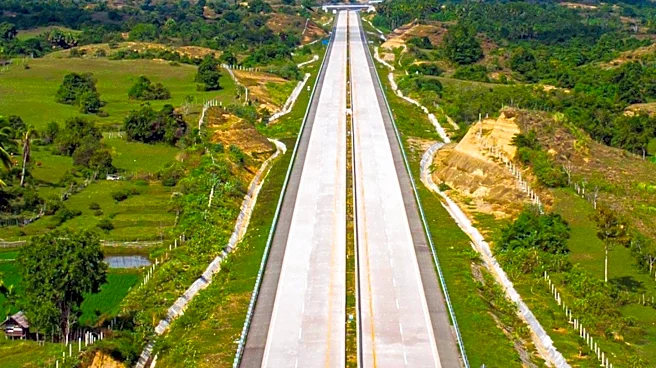
rehabilitation, and maintenance of roads spanning more than 47 kilometers. Regional Director Sugeith Martínez and Inspection Chief Olinda Agudo explained the project's current status and the necessary stages before construction begins. The plan includes rehabilitating three roads: Ola–El Palmar–El Peñón (approximately 16.1 km), El Palmar–Tulú (around 16 km, including a new vehicular bridge), and El Palmar–El Copé–El Palmar de la Mina (nearly 15 km). Additionally, a critical point on the La Pintada–El Picacho road will be addressed. Residents expressed concerns about road deterioration and the impact of rains, prompting the MOP to agree to temporary palliative and maintenance work while administrative processes are completed.
Why It's Important?
This infrastructure project is significant for the Coclé province in Panama, as it aims to improve connectivity and transportation for local communities. The investment of over $18 million highlights a commitment to enhancing regional infrastructure, which can stimulate economic activity by facilitating the movement of goods and people. Better roads can reduce travel times, lower transportation costs, and improve access to markets, education, and healthcare for residents. The inclusion of a new vehicular bridge and the rehabilitation of critical road sections will directly address existing challenges, such as deterioration and difficulties caused by weather conditions. The project's focus on maintenance and rehabilitation, alongside new construction, suggests a comprehensive approach to long-term infrastructure sustainability, which is crucial for regional development and the quality of life for the affected population.
What's Next?
The project's contract is currently awaiting endorsement from the Comptroller General of the Republic. Once this administrative step is completed, the contractor will proceed with technical and environmental assessments as stipulated in the contract, which are preliminary stages before the commencement of construction. In the interim, the MOP has committed to carrying out palliative and maintenance work to temporarily improve road conditions for residents. This temporary measure aims to alleviate immediate concerns while the more extensive construction and rehabilitation efforts, involving asphalt paving, are prepared. The timeline for the full initiation of the project is contingent upon the completion of these administrative and preparatory phases, with residents anticipating the long-term improvements to their local infrastructure.
Beyond the Headlines
The presentation of this road project underscores the broader challenges faced by developing regions in maintaining and upgrading essential infrastructure. The residents' concerns about road deterioration and the impact of weather highlight the critical need for resilient infrastructure that can withstand environmental factors. The MOP's commitment to temporary solutions while awaiting full project approval reflects a common governmental strategy to manage public expectations and address immediate needs. This project also touches upon the socio-economic implications of infrastructure development, as improved roads can significantly impact local economies, access to services, and overall community well-being. The process of securing administrative approval and managing public engagement before and during such large-scale projects is a complex interplay of bureaucratic procedures, community advocacy, and practical engineering considerations.