

What's Happening?
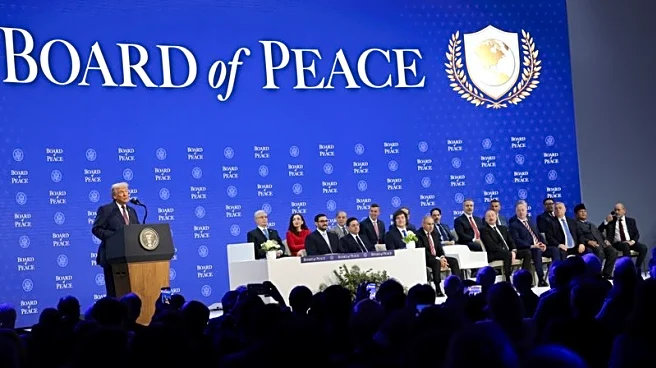
A significant dispute has emerged between the European Union and the United States regarding the future of Gaza, centered around President Trump's 'Board of Peace'. The EU's head of foreign policy, Kaja Kallas, has criticized the Board as a personal vehicle
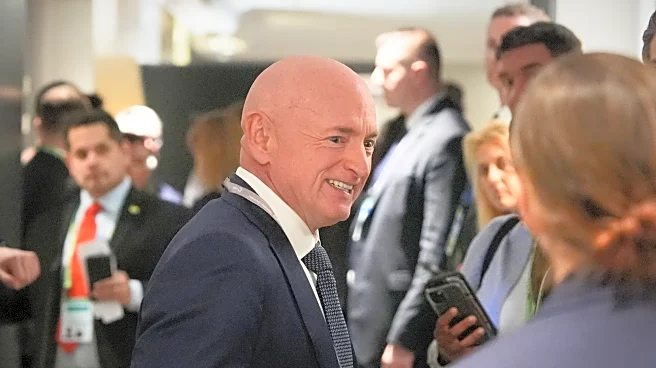
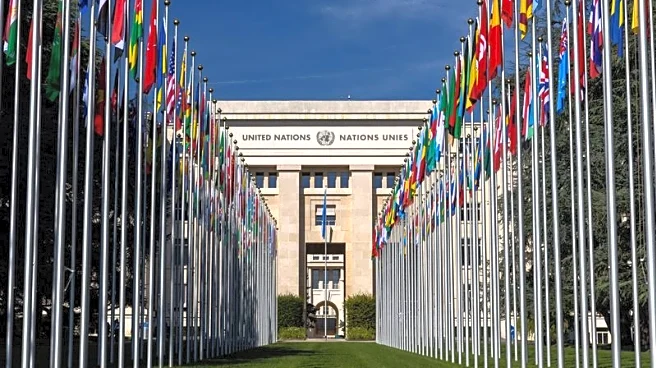
for President Trump, lacking accountability to Palestinians or the United Nations. The controversy was highlighted at the Munich Security Conference, where Kallas expressed concerns that the Board's charter does not reference Gaza or the UN, diverging from the original UN resolution intended to aid Gaza. The Democratic senator Chris Murphy also raised concerns about the potential misuse of reconstruction funds. The Board of Peace, according to critics, bypasses the UN mandate and excludes European involvement, despite Europe being a major funder of the Palestinian Authority.
Why It's Important?
The dispute over the Board of Peace is significant as it highlights tensions between the US and EU regarding Middle East policy, particularly in Gaza. The EU's exclusion from the process could strain transatlantic relations and impact international efforts to stabilize Gaza. The Board's lack of accountability raises concerns about the effective use of reconstruction funds, potentially affecting humanitarian aid and peace efforts. The situation underscores broader geopolitical dynamics, with the US pursuing a unilateral approach that may undermine multilateral cooperation. The controversy also reflects deeper issues in the Israeli-Palestinian conflict, including the division of Gaza and the stalled two-state solution.
What's Next?
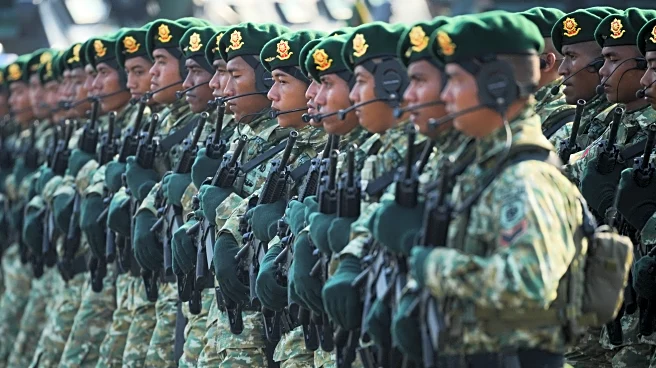
The Board of Peace is set to meet in Washington next week, which could further escalate tensions between the US and EU. The meeting may address the criticisms and seek to clarify the Board's objectives and accountability mechanisms. The involvement of international stakeholders, such as Indonesia's contribution of troops to the International Stabilisation Force, indicates ongoing efforts to stabilize the region. However, the lack of consensus on the Board's role and the exclusion of key players like the EU could hinder progress. The situation may prompt further diplomatic discussions and potential adjustments to the Board's framework to ensure broader international support.
Beyond the Headlines
The dispute over the Board of Peace raises ethical and legal questions about the governance of international aid and reconstruction efforts. The potential for funds to be misused highlights the need for transparent and accountable mechanisms in international peace initiatives. The situation also reflects broader challenges in the Israeli-Palestinian conflict, including the division of Gaza and the viability of a two-state solution. The controversy may prompt a reevaluation of international strategies in the region, emphasizing the importance of inclusive and multilateral approaches to conflict resolution.