
What's Happening?
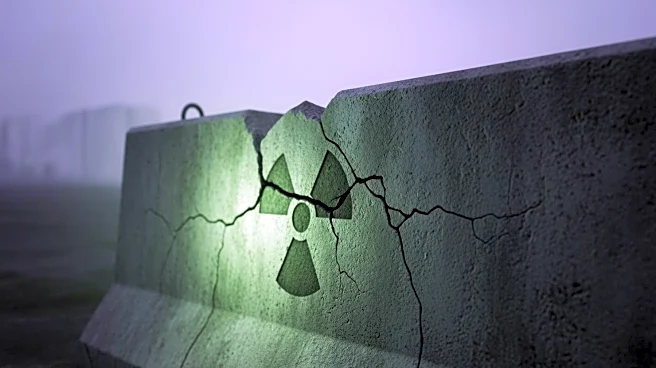
The United Nations' International Atomic Energy Agency (IAEA) has reported that a drone strike has severely damaged the protective shield at the Chernobyl nuclear power plant. This damage has compromised
the shield's ability to contain radioactive materials from the 1986 disaster. The strike, which occurred in February, has been attributed to Russian forces by Ukraine, though Russia denies involvement. The IAEA's assessment indicates that the shield has lost its primary safety functions, including its confinement capability. Temporary repairs are planned for 2026 to facilitate permanent restoration. Despite the damage, radiation levels remain normal, according to Ukrainian President Volodymyr Zelenskyy.
Why It's Important?
The damage to the Chernobyl shield is a critical issue as it affects the containment of radioactive materials, posing potential risks to the environment and public health. The incident highlights the vulnerability of nuclear facilities in conflict zones and the need for robust international oversight. The situation could have significant implications for nuclear safety policies and international relations, particularly between Ukraine and Russia. The potential for increased radiation exposure could impact millions living near the exclusion zone, emphasizing the importance of timely repairs and international cooperation.
What's Next?
The IAEA plans to oversee temporary repairs in 2026, with the goal of restoring the shield's confinement capabilities. The international community will likely monitor the situation closely, as it could influence future nuclear safety protocols and conflict management strategies. The incident may also prompt discussions on the security of nuclear sites in conflict areas and the role of international organizations in ensuring safety. The ongoing geopolitical tensions between Ukraine and Russia could further complicate efforts to address the damage and ensure long-term safety.