






What's Happening?
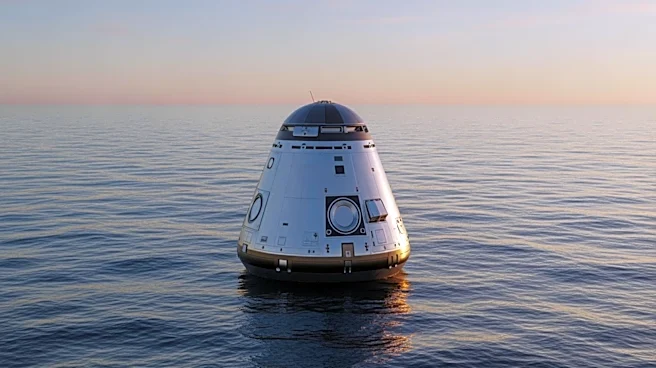
NASA's Artemis 2 mission has successfully returned to Earth, marking a significant milestone in the agency's efforts to return humans to the Moon. The mission, which included a 10-day journey around the Moon, was the first crewed lunar mission since the Apollo
program. The crew, consisting of NASA astronauts Reid Wiseman, Victor Glover, Christina Koch, and Canadian astronaut Jeremy Hansen, splashed down in the Pacific Ocean and were safely recovered. The mission demonstrated the capabilities of the Orion spacecraft and set the stage for future Artemis missions, including the planned lunar landing with Artemis 4.
Why It's Important?
The success of Artemis 2 is a crucial step in NASA's Artemis program, which aims to establish a sustainable human presence on the Moon. This mission not only tested the Orion spacecraft's systems but also built confidence in NASA's ability to conduct complex crewed missions beyond low Earth orbit. The achievements of Artemis 2 are expected to inspire public interest and support for space exploration, as well as foster international collaboration. The program's success could lead to technological advancements and economic benefits, reinforcing the U.S.'s leadership in space exploration.
What's Next?
With Artemis 2 completed, NASA is focusing on the upcoming Artemis 3 mission, which will rehearse docking procedures in Earth orbit. This mission is scheduled for mid-2027 and will involve the Orion spacecraft and lunar landers from SpaceX and Blue Origin. The ultimate goal is to achieve a lunar landing with Artemis 4 by late 2028. NASA is also working on establishing a permanent lunar base by 2032, which will serve as a platform for future Mars missions. Continued progress in the Artemis program will depend on addressing technical challenges and securing funding and international partnerships.