






What's Happening?
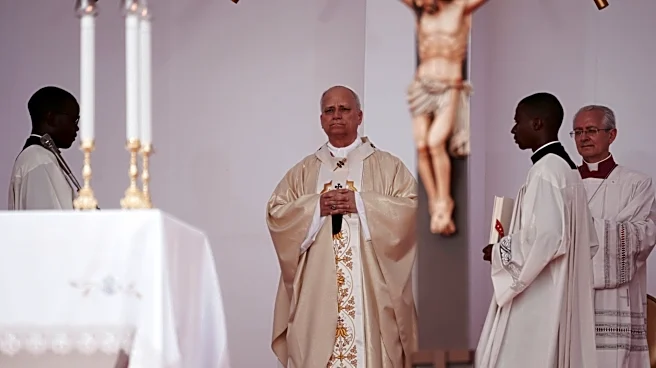
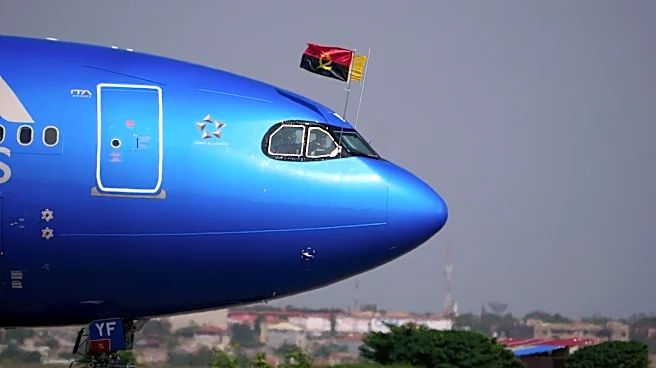
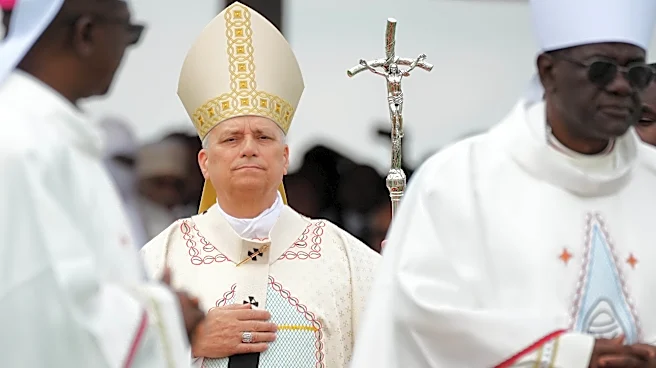
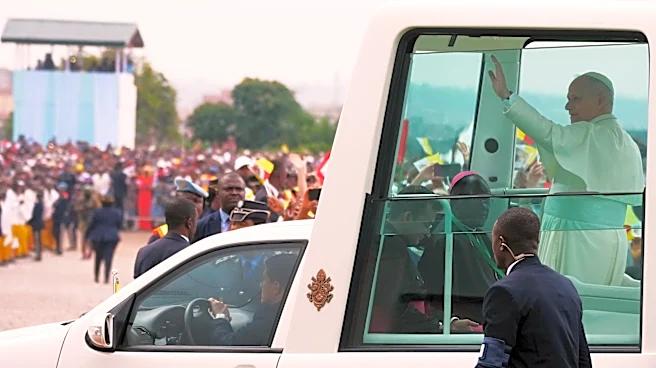
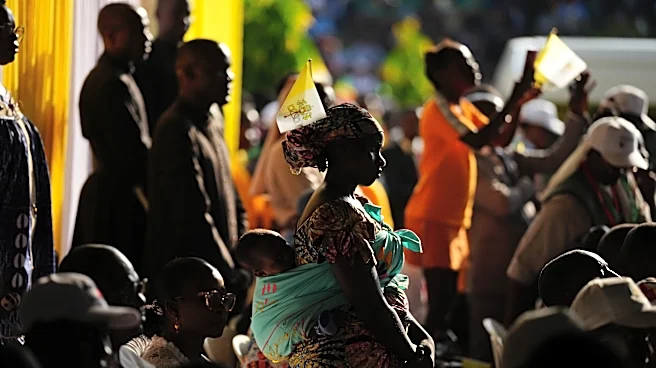
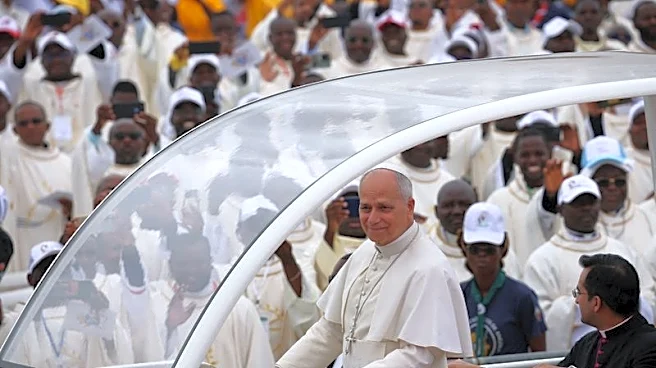
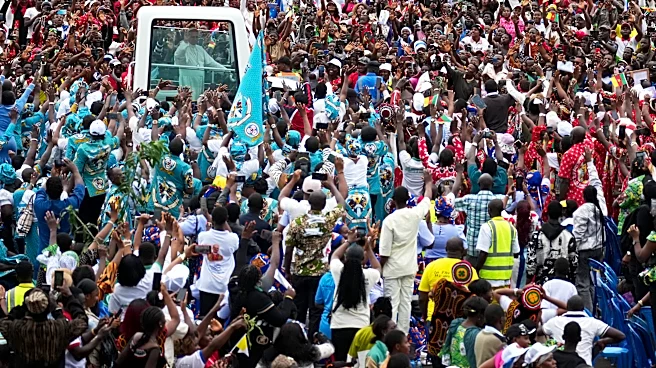
Pope Leo XIV visited the Sanctuary of Mama Muxima in Angola, a site historically significant for its role in the African slave trade during Portugal's colonial rule. The pope prayed at the shrine, which was originally built by Portuguese colonizers in the 16th
century and served as a hub where enslaved Africans were baptized before being sent to the Americas. During his visit, Pope Leo XIV, whose ancestry includes both enslaved people and slave owners, emphasized the need for a world without wars, injustices, or poverty. The visit highlighted the Catholic Church's historical involvement in the slave trade, a topic that remains sensitive and complex within the Church's history.
Why It's Important?
The visit by Pope Leo XIV to the Muxima shrine is significant as it brings attention to the Catholic Church's historical role in the slave trade, a subject that has not been fully acknowledged or atoned for by the Vatican. This event is particularly meaningful for Black Catholics, as it represents a moment of healing and reflection on the Church's past actions. The pope's visit also underscores ongoing discussions about the Church's responsibility to address historical injustices and the need for reconciliation. The broader implications include potential shifts in how the Church engages with its history and the communities affected by its past actions.
What's Next?
While the visit was primarily to commemorate the shrine's role as a pilgrimage site, it may prompt further dialogue within the Catholic Church about its historical involvement in the slave trade. There could be calls for more explicit apologies or actions from the Vatican regarding its past directives that supported slavery. The visit might also influence how the Church addresses other historical injustices and engages with communities seeking acknowledgment and reconciliation. Additionally, Pope Leo XIV's personal connection to the history of slavery may lead to further exploration of his ancestry and its impact on his papacy.
Beyond the Headlines
The visit to Muxima by Pope Leo XIV highlights the complex legacy of the Catholic Church in the context of colonialism and slavery. It raises questions about the ethical responsibilities of religious institutions in acknowledging and addressing their historical roles in systemic injustices. The event also reflects broader cultural and historical narratives about the impact of colonialism on African societies and the ongoing need for healing and reconciliation. The pope's personal history adds another layer to these discussions, potentially influencing how he approaches issues of race and justice within the Church.