

What's Happening?
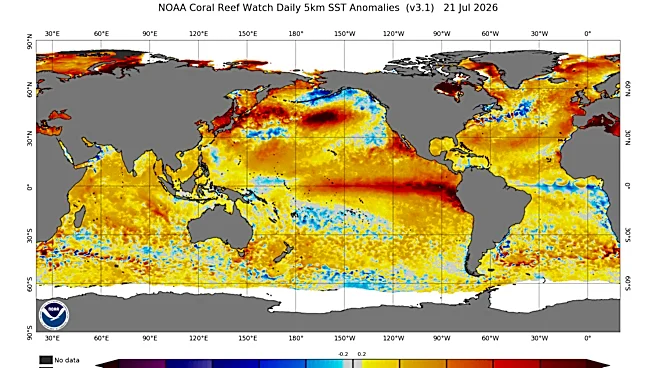
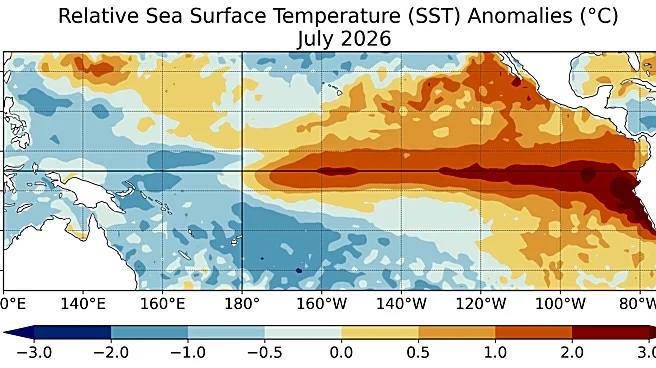
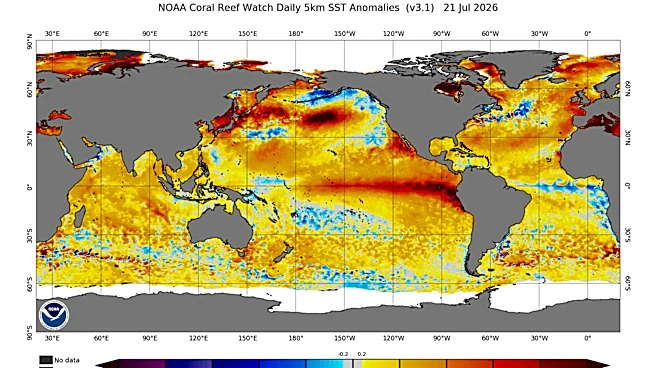
The U.S. National Oceanic and Atmospheric Administration (NOAA) has significantly increased its forecast for the likelihood of El Niño reaching record strength, estimating a nearly 70% chance. This adjustment is based on rapid intensification and computer
models predicting a peak in late fall and early winter. El Niño, a climate cycle characterized by warmer than average ocean temperatures in the central and eastern tropical Pacific, affects global weather patterns by transferring heat into the atmosphere, leading to droughts in Indonesia and Australia and flooding in parts of South America. NOAA's revised forecast suggests that sea surface temperature anomalies could exceed 2.5 degrees Celsius above average, potentially surpassing the 1982-1983 El Niño, previously the strongest on record.
Why It's Important?
The potential for a record-strength El Niño has significant implications for global weather patterns and economic conditions. In the U.S., it could lead to wetter conditions in California and the southern states, while the Midwest might experience a warmer and drier winter. The phenomenon also contributes to global temperature increases, exacerbating the effects of climate change. Industries such as agriculture, insurance, and energy could face challenges due to altered weather patterns, impacting crop yields, infrastructure, and energy demand. The increased likelihood of extreme weather events underscores the need for preparedness and adaptation strategies across affected regions.
What's Next?
As El Niño progresses, stakeholders including governments, businesses, and communities will need to monitor developments closely. NOAA's forecasts will guide preparations for potential impacts, such as increased rainfall or drought conditions. Policymakers may need to consider additional funding for disaster preparedness and response efforts. The agricultural sector, in particular, will need to adapt to changing conditions to mitigate potential losses. Continued research and monitoring will be crucial in understanding the full scope of El Niño's effects and informing future climate resilience strategies.