







What's Happening?
Comet Tempel 2, also known as Comet 10P/Tempel, is currently in a favorable position for observation as it approaches its perihelion in early August. The comet is visible in the constellation Capricornus, rising late in the evening and remaining visible overnight.
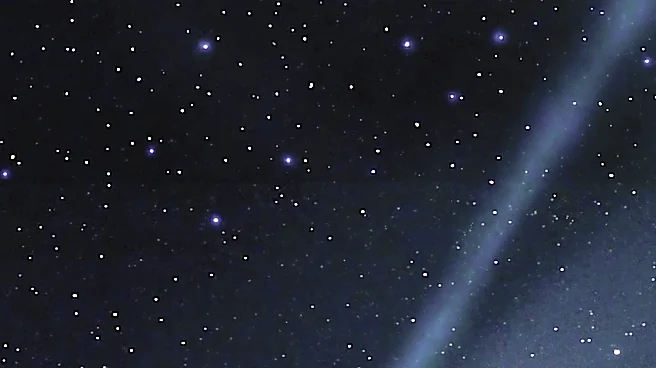
Observers can locate it approximately 20 degrees above the horizon, southwest of the star Deneb Algedi. Recent observations have placed the comet at around 9th magnitude, making it an easy target for binoculars or telescopes, especially in dark skies. The comet's tail is undergoing visual changes, appearing as a thin line due to Earth's position relative to the comet's orbital plane.
Why It's Important?
The visibility of Comet Tempel 2 provides a unique opportunity for both amateur and professional astronomers to observe and study a comet as it approaches the Sun. Such events allow for the collection of valuable data on the comet's composition, behavior, and interaction with solar radiation. This can enhance our understanding of cometary dynamics and the early solar system. For the general public, it offers a chance to engage with astronomy and appreciate the wonders of the night sky.
What's Next?
As Comet Tempel 2 continues its journey towards the Sun, it will reach its closest point, or perihelion, in early August. Observers are encouraged to take advantage of the current favorable viewing conditions, as the comet's brightness and visibility may change as it moves closer to the Sun. Astronomers will continue to monitor the comet, providing updates and guidance for optimal viewing.