


What's Happening?
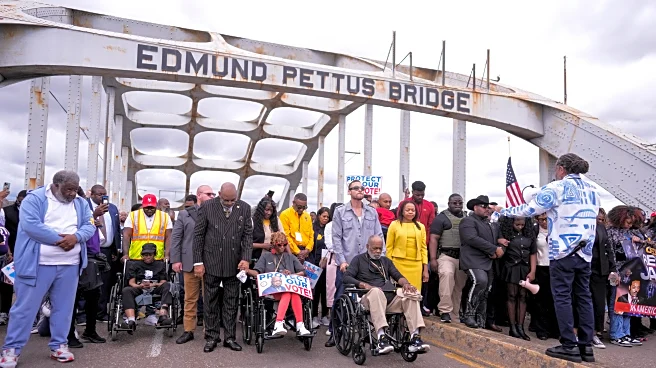
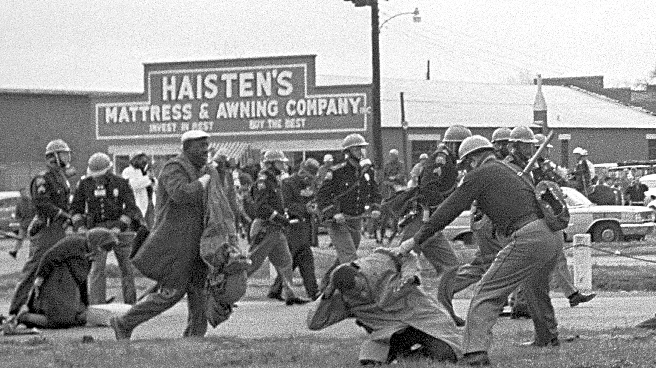
On March 7, 1965, a pivotal event in the American civil rights movement occurred when over 500 demonstrators were violently confronted by law enforcement at the Edmund Pettus Bridge in Selma, Alabama. This day, known as 'Bloody Sunday,' saw state troopers
and a sheriff's posse using tear gas and batons against the marchers, who were advocating for voting rights. The brutality of the event was broadcast nationwide, drawing significant attention to the civil rights struggle and leading to increased support for the movement. This incident was a catalyst for the passage of the Voting Rights Act of 1965, a landmark piece of federal legislation that aimed to eliminate racial discrimination in voting.
Why It's Important?
'Bloody Sunday' is a significant historical event that underscored the systemic racial injustices faced by African Americans in the United States. The violent suppression of peaceful protesters highlighted the urgent need for legislative change and galvanized public opinion, contributing to the eventual passage of the Voting Rights Act. This act was crucial in dismantling legal barriers at the state and local levels that prevented African Americans from exercising their right to vote. The event remains a powerful symbol of the struggle for civil rights and continues to inspire movements for social justice and equality in the U.S.
What's Next?
The legacy of 'Bloody Sunday' continues to influence contemporary discussions on voting rights and racial equality. As the U.S. grapples with ongoing debates over voting legislation and access, the historical context of events like Selma serves as a reminder of the progress made and the challenges that remain. Advocacy groups and civil rights organizations continue to draw on the lessons of the past to address current issues, emphasizing the importance of protecting and expanding voting rights for all citizens.
Beyond the Headlines
The events of 'Bloody Sunday' also highlight the role of media in shaping public perception and policy. The widespread coverage of the violence in Selma played a crucial role in mobilizing national and international support for the civil rights movement. This underscores the power of media in bringing attention to social injustices and influencing political change. Additionally, the event has become a cultural touchstone, commemorated in films, literature, and annual marches, ensuring that the lessons of Selma remain relevant in the ongoing fight for equality.