




What's Happening?
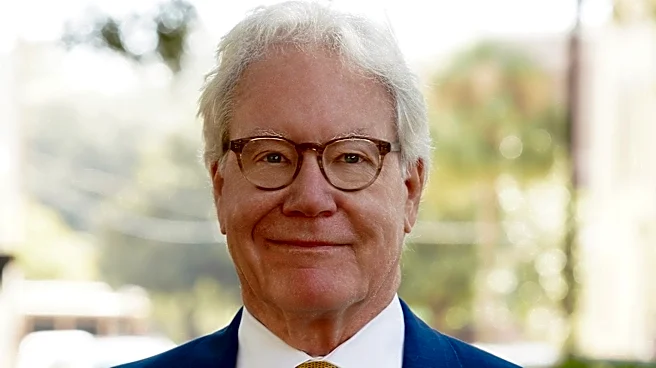
U.S. Senator Raphael Warnock is advocating for a statewide moratorium on data centers in Georgia. This call follows his visit to Effingham County, where OpenAI plans to construct a large data center. The project has encountered significant local opposition
since its announcement in July, with residents expressing surprise and demanding more information and involvement in the development process. Senator Warnock echoed these concerns, emphasizing the importance of companies building relationships with local communities. OpenAI has committed to providing an $80 million community fund and addressing local concerns through specific commitments. The community's unified opposition to the data center was applauded by Warnock. State regulators recently approved a contract for Georgia Power to supply 3,200 megawatts of electricity to the OpenAI data center, the largest such contract reported by the utility, with additional measures to protect residents and small businesses from energy cost increases. Other coastal communities, such as Savannah and Richmond Hill, have also taken action against data centers, with Savannah implementing a 155-day moratorium and Richmond Hill prohibiting them through local development ordinances.
Why It's Important?
The push for a statewide moratorium on data centers in Georgia highlights growing tensions between technological expansion and local community interests. The significant energy demands of data centers, exemplified by the 3,200-megawatt contract for the OpenAI facility, raise concerns about infrastructure strain and potential energy cost impacts on residents and small businesses. This situation underscores the broader challenge of balancing economic development and technological advancement with environmental sustainability and community well-being. The unified local opposition, transcending political lines, demonstrates a powerful grassroots movement demanding greater transparency and accountability from large corporations and government entities. The actions of Savannah and Richmond Hill indicate a trend of local governments taking proactive measures to control data center proliferation, which could set a precedent for other communities facing similar development proposals. This issue is critical for Georgia's energy policy, land use planning, and the future of its relationship with major tech companies.
What's Next?
Following Senator Warnock's call, the focus will likely shift to the Georgia state legislature and regulatory bodies to consider a potential statewide moratorium on data centers. OpenAI is expected to continue its efforts to address community concerns, potentially through further engagement and the implementation of its promised $80 million community fund. Local communities, emboldened by Warnock's support and the actions of neighboring cities like Savannah and Richmond Hill, may intensify their advocacy for more stringent regulations or outright prohibitions on data center development. The approved electricity contract with Georgia Power will proceed, but public scrutiny over energy consumption and its impact on utility costs will likely increase. This situation could lead to broader discussions about the environmental footprint of large-scale tech infrastructure and the need for more comprehensive state-level policies to manage such developments, potentially influencing future legislative sessions and local zoning ordinances across Georgia.
Beyond the Headlines
This development extends beyond a simple land-use dispute, touching upon fundamental questions of corporate responsibility, local governance, and the environmental impact of the digital age. The immense energy requirements of data centers, particularly for AI operations, bring to light the hidden costs of technological advancement, including increased carbon emissions and strain on power grids. The community's demand for 'relationships' rather than just 'jobs' reflects a deeper desire for genuine partnership and respect for local culture and environment, challenging the traditional model of top-down development. This conflict could catalyze a re-evaluation of how states and localities regulate energy-intensive industries, potentially leading to innovative policies that prioritize sustainable development and community consent. It also highlights the evolving role of elected officials in mediating between global tech giants and local populations, emphasizing the need for robust democratic processes in shaping technological landscapes.