








What's Happening?
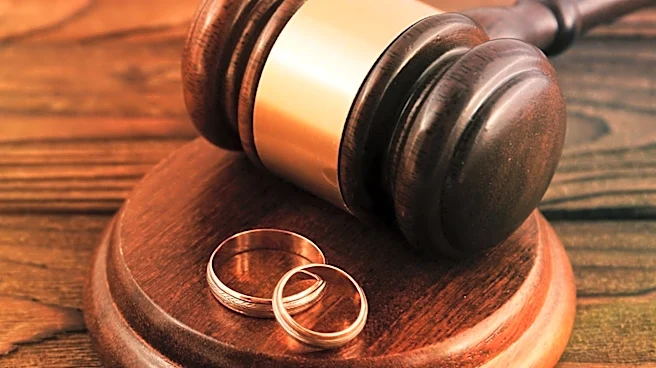
The Texas State Commission on Judicial Conduct is set to pay nearly $950,000 in attorneys' fees and expenses following legal disputes involving judges who refused to officiate same-sex weddings due to religious beliefs. The commission will pay $630,000
in one case involving Judge Dianne Hensley, who was previously issued a public warning in 2019 for her refusal to marry same-sex couples. A Texas district court ruled that this action violated Hensley's religious rights. Additionally, the commission agreed to pay $315,800 to settle a federal lawsuit with Jack County Judge Brian Keith Umphress. The commission will also compensate Hensley $10,000 for lost income, although she estimated her losses at $60,000. The commission's attempt to argue that Hensley's refusal was politically motivated was rejected by the court, which ruled in her favor. Another case involving Judge William P. Brandt, representing a class of justices of the peace, remains unresolved.
Why It's Important?
This development underscores the ongoing legal and ethical tensions between religious freedom and anti-discrimination laws in the United States. The financial penalties imposed on the Texas State Commission on Judicial Conduct highlight the potential costs of enforcing policies that may infringe on religious rights. This case could set a precedent for similar disputes across the country, influencing how judicial bodies handle cases involving religious objections to same-sex marriage. The outcome may embolden other judges with similar beliefs to challenge penalties, potentially leading to more legal battles and financial liabilities for state commissions. The resolution of these cases also reflects broader societal debates about the balance between religious liberty and equal rights for LGBTQ+ individuals.
What's Next?
The commission still faces another lawsuit from Judge William P. Brandt, who is seeking damages on behalf of a group of justices of the peace who have opted out of officiating same-sex weddings. Mediation efforts in this case have not yet resulted in a settlement. The outcome of this case could further impact the legal landscape regarding religious exemptions and same-sex marriage officiation. Stakeholders, including LGBTQ+ advocacy groups and religious organizations, are likely to continue monitoring these developments closely, as they could influence future legislative and judicial actions.