




What's Happening?
The Maryland State Board of Elections has released the local candidates list for the 2026 Gubernatorial General Election. The list, last updated on September 9, 2026, at 12:00 PM, details candidates across various counties for positions such as County
Commissioner, State's Attorney, Clerk of the Circuit Court, Register of Wills, Judge of the Orphans' Court, Sheriff, and Board of Education. For instance, Allegany County lists Chelsea Boor and Carol Taccino as Democratic candidates for County Commissioner, alongside Republicans Bill Atkinson, Creade Brodie, Jr., and Dave Caporale, and unaffiliated candidate Kit Pepper Lescallette. Anne Arundel County shows Allison M. Pickard (Democratic) and Dave Crawford (Republican) vying for County Executive. Baltimore City's State's Attorney race features Ivan J. Bates (Democratic), while Baltimore County's County Executive candidates include Julian Jones (Democratic), Patrick V. Dyer (Republican), and unaffiliated candidate Rob Daniels. The comprehensive list provides names, party affiliations, jurisdictions, and active statuses for numerous candidates across Maryland's counties, including Calvert, Caroline, Carroll, Cecil, Charles, Dorchester, Frederick, Garrett, Harford, Howard, Kent, Montgomery, Prince George's, Queen Anne's, Saint Mary's, Somerset, Talbot, Washington, Wicomico, and Worcester.
Why It's Important?
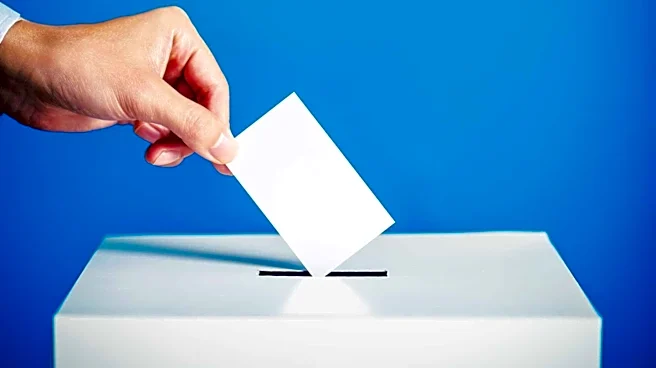
This release is crucial for Maryland's democratic process, providing transparency and essential information to voters ahead of the 2026 Gubernatorial General Election. The detailed list allows citizens to identify candidates running for local offices, understand their party affiliations, and begin researching their platforms. This early access to candidate information is vital for informed decision-making, fostering civic engagement, and ensuring accountability from elected officials. The diverse range of candidates across various counties and positions, from county commissioners to school board members, highlights the breadth of local governance that will be shaped by this election. For political parties, the list serves as a foundational document for campaign strategies, resource allocation, and voter outreach efforts, as they aim to secure victories in key local races that can influence broader state-level political dynamics. The participation of unaffiliated candidates also underscores the evolving political landscape and the potential for independent voices in local governance.
What's Next?
Following the release of the candidate list, the focus will shift towards the official campaign period leading up to the 2026 Gubernatorial General Election. Candidates will likely intensify their outreach efforts, including public appearances, debates, and digital campaigns, to connect with voters and articulate their policy positions. Voters will have the opportunity to engage with candidates through various forums, scrutinize their backgrounds, and evaluate their suitability for office. Political parties and independent organizations will also ramp up their voter registration drives and get-out-the-vote initiatives. The Maryland State Board of Elections will continue to update election-related information, including polling locations, voter guides, and any changes to candidate statuses. The period leading up to the election will be characterized by increased political activity, public discourse, and media coverage, all aimed at preparing the electorate for the upcoming vote.
Beyond the Headlines
The comprehensive nature of this candidate list extends beyond mere names and affiliations, offering a snapshot of the political health and demographic diversity of Maryland's local communities. The presence of candidates from various political parties, including Democratic, Republican, Green, and unaffiliated, reflects the diverse political ideologies within the state. The inclusion of non-partisan candidates for Board of Education positions underscores the community's interest in separating educational governance from partisan politics. This detailed roster can also serve as a valuable resource for political scientists, researchers, and journalists to analyze electoral trends, identify emerging political figures, and assess the competitive landscape of local elections. Furthermore, the data can inform discussions about representation, voter turnout, and the effectiveness of local governance structures, contributing to a deeper understanding of Maryland's political ecosystem.