




What's Happening?
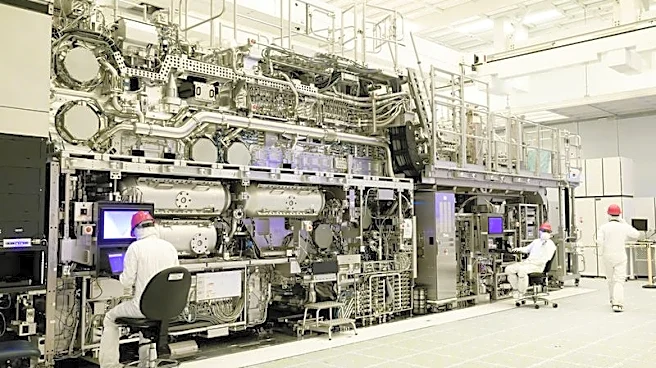
Recent developments in China's semiconductor industry have raised concerns among global chipmakers. Reports indicate that a Chinese state-backed company has begun manufacturing immersion deep-ultraviolet (DUV) lithography machines, which are crucial for
producing advanced chips. This move poses a potential threat to ASML, a Dutch company that currently dominates the market for these machines. ASML's shares fell by over 5% following the news, highlighting the market's sensitivity to China's technological advancements. Despite the progress, China's DUV machines are still in the early stages and do not yet match ASML's technology. The Chinese company plans to produce five DUV machines this year and approximately 20 next year, compared to ASML's expected shipment of 130 machines this year.
Why It's Important?
The development is significant as it represents China's ongoing efforts to reduce its reliance on Western technology and establish itself as a major player in the global semiconductor market. This could potentially disrupt the current market dynamics, where ASML holds a significant advantage. The advancements in China's chipmaking capabilities could lead to increased competition, affecting the market share and profitability of established players like ASML. Additionally, the geopolitical implications are considerable, as the U.S. and its allies have imposed restrictions on the export of advanced chipmaking technology to China. This move by China could alter the balance of power in the semiconductor industry, impacting global supply chains and technological innovation.
What's Next?
As China continues to develop its chipmaking technology, the global semiconductor industry may see increased competition and potential shifts in market leadership. ASML and other Western companies may need to innovate and adapt to maintain their competitive edge. The geopolitical landscape could also be affected, with potential changes in trade policies and international relations. Stakeholders in the semiconductor industry, including governments and businesses, will likely monitor these developments closely to assess their impact on global technology markets.