

What's Happening?
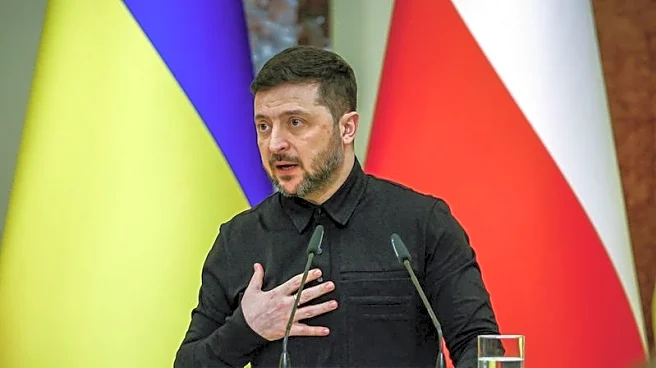
Ukrainian President Volodymyr Zelenskyy and U.S. envoys, including President Trump's special envoy Steve Witkoff and Jared Kushner, have arrived in Berlin for discussions aimed at negotiating an end to the ongoing war in Ukraine. The talks are part of a series
of meetings involving Ukrainian, U.S., and European officials. Zelenskyy emphasized the need for Ukraine to receive security guarantees similar to those offered to NATO members, which he believes are crucial to preventing further Russian aggression. The discussions are complicated by Russia's demand for Ukraine to withdraw from the Donetsk region, a condition Zelenskyy has rejected. The U.S. has proposed a demilitarized economic zone in Donetsk, but Zelenskyy has dismissed this as unworkable.
Why It's Important?
The outcome of these talks could significantly impact the geopolitical landscape in Eastern Europe. A successful peace deal would stabilize the region and potentially prevent further Russian expansion. For the U.S., achieving a resolution aligns with President Trump's goal of ending the conflict swiftly. However, the negotiations face significant hurdles, including territorial disputes and the need for legally binding security assurances. The talks also highlight the broader implications for NATO and European security, as the conflict has strained relations and tested alliances. The resolution of this conflict could set a precedent for handling similar disputes in the future.
What's Next?
The next steps involve continued negotiations, with Zelenskyy expected to meet with German Chancellor Friedrich Merz and possibly other European leaders. The U.S. and European allies will need to address Russia's demands and Ukraine's security concerns to reach a viable agreement. The situation remains fluid, with potential for further diplomatic engagements or escalations depending on the progress of these talks. The international community will be closely monitoring the outcomes, as they could influence future diplomatic strategies and security policies in the region.