




What's Happening?
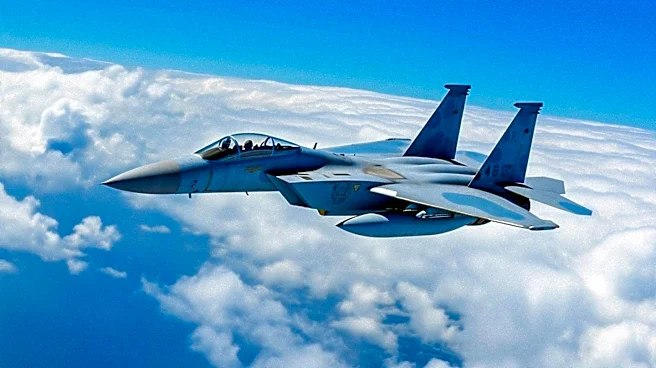
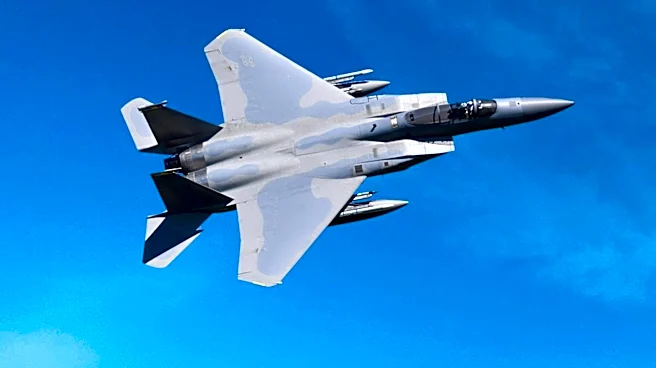
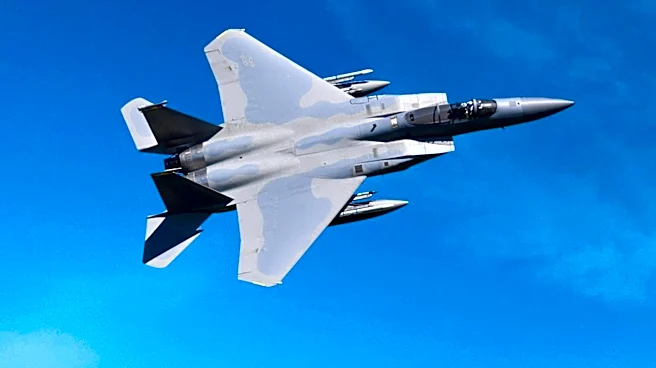
Boeing has delivered the 22nd F-15EX Eagle II fighter jet to the U.S. Air Force. This particular aircraft is designated for deployment at Kadena Air Base, a key U.S. military installation in Japan. The F-15EX Eagle II is an advanced version of the F-15 fighter,
designed to provide enhanced capabilities and extend the service life of the Air Force's fighter fleet. This delivery is part of an ongoing effort to modernize and strengthen U.S. air power, particularly in strategic international locations. The F-15EX program aims to replace aging F-15C/D models, offering improved avionics, radar, and weapon-carrying capacity. The continuous delivery of these advanced fighters underscores the commitment to maintaining a robust and technologically superior air defense posture.
Why It's Important?
The deployment of the F-15EX Eagle II to Kadena Air Base is strategically significant for U.S. national security and its presence in the Indo-Pacific region. Kadena Air Base serves as a critical hub for U.S. operations, and the introduction of advanced fighter jets enhances its defensive and offensive capabilities. This modernization effort ensures that the U.S. Air Force can effectively respond to evolving geopolitical challenges and maintain air superiority. For the U.S. defense industry, particularly Boeing, these deliveries represent continued contracts and a stable production line, supporting American jobs and technological innovation. The F-15EX's advanced features contribute to the overall readiness and effectiveness of the U.S. military, projecting strength and stability to allies and potential adversaries alike.
What's Next?
The U.S. Air Force will integrate the newly delivered F-15EX Eagle II into its operational fleet at Kadena Air Base. This will involve pilot training, maintenance crew familiarization, and the incorporation of the aircraft into existing defense strategies and exercises. Future deliveries of F-15EX aircraft are expected as the Air Force continues its modernization plan, gradually replacing older models. Boeing will likely continue to focus on fulfilling its contractual obligations for the F-15EX program, potentially exploring further upgrades or modifications based on operational feedback. The ongoing deployment of these advanced fighters will contribute to the long-term strategic positioning of the U.S. in the Indo-Pacific region.
Beyond the Headlines
The delivery of the F-15EX Eagle II to Kadena Air Base highlights the broader strategic shift towards strengthening U.S. military presence and capabilities in the Indo-Pacific. This move is not just about replacing old aircraft; it signifies a commitment to maintaining a technological edge in a region with increasing geopolitical complexities. The F-15EX, with its open architecture and advanced systems, allows for easier future upgrades, ensuring its relevance for decades. This long-term investment in air power reflects a proactive approach to national defense, emphasizing deterrence and rapid response capabilities. The continuous modernization of the U.S. Air Force's fleet also has implications for international defense cooperation, as allies often seek to align their capabilities with those of the U.S.