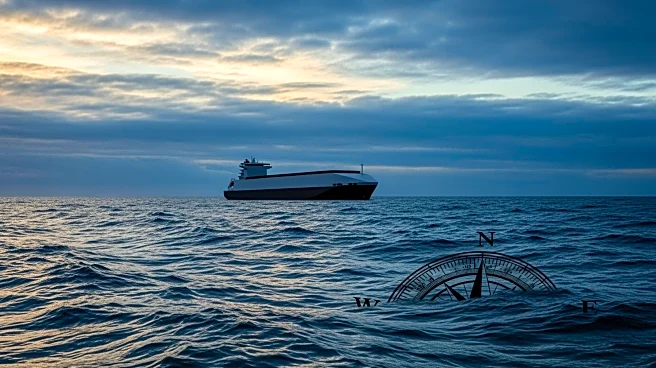

What's Happening?
The maritime industry is increasingly affected by geopolitical tensions, with the war in Ukraine highlighting the vulnerability of shipping operations to political instability. The conflict has disrupted
trade routes, increased fuel costs, and led to a rise in cyberattacks on maritime infrastructure. These challenges have created a volatile freight market, with supply chain disruptions and increased risk exposure. The industry is now forced to adapt to a new normal where geopolitical considerations are central to operational decisions.
Why It's Important?
The impact of geopolitical tensions on the shipping industry has significant economic implications. Disruptions to trade routes and increased operational costs affect global supply chains and economic stability. The rise in cyberattacks poses a threat to maritime security and highlights the need for improved cybersecurity measures. The industry's response to these challenges will influence global trade dynamics and the future of maritime operations.
What's Next?
Shipping companies are likely to enhance their resilience strategies, focusing on contractual flexibility, contingency planning, and scenario analysis. The industry may also see increased investment in cybersecurity and efforts to diversify trade routes to mitigate geopolitical risks. The ongoing conflict in Ukraine and other geopolitical tensions will continue to shape the maritime industry's operating environment.
Beyond the Headlines
The situation underscores the interconnectedness of global industries and the far-reaching impact of geopolitical events. The maritime industry's challenges reflect broader issues of global governance and the need for international cooperation to address security and economic risks. The industry's adaptation to these challenges may serve as a model for other sectors facing similar geopolitical pressures.