



What's Happening?
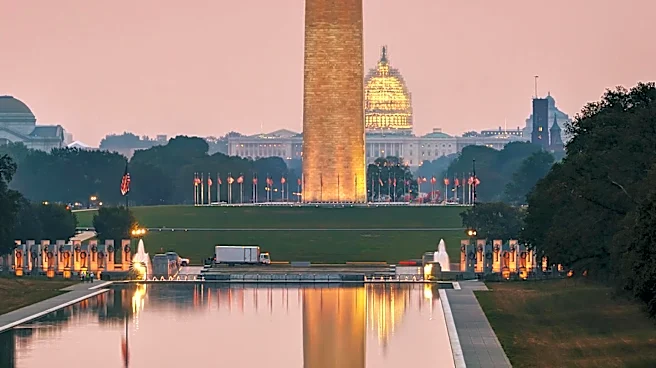
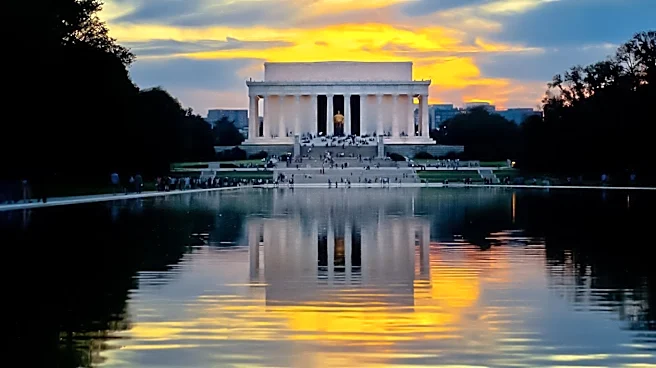
The Trump administration has installed new signs around the Lincoln Memorial Reflecting Pool, currently undergoing repairs, to attribute its damaged condition to previous administrations. These signs claim that 'since 1922, prior administrations have
neglected this iconic national landmark,' citing clogged pipes and dirty sidewalks and coping stones. This development follows an admission by prosecutor Jeanine Pirro that damage to the pool was caused by the Trump administration's contractor, not vandals, as President Trump had previously asserted. A recent court filing further revealed that engineers had warned the administration in early June about the Reflecting Pool floor peeling due to the renovation process and materials used. Despite these warnings, President Trump had accused multiple individuals, including former Olympian Dave Hearn, of 'destroying' the pool. Charges against Hearn were subsequently dropped after the engineering report cast significant doubt on his culpability.
Why It's Important?
This situation highlights a pattern of the Trump administration deflecting blame for issues, even when internal reports indicate otherwise. The politicization of a national landmark like the Lincoln Memorial Reflecting Pool, a symbol of unity and historical significance, can erode public trust in government accountability. The decision to attribute the pool's disrepair to past administrations, despite evidence pointing to recent renovation issues, could be seen as an attempt to control the narrative and shift responsibility. This approach can undermine transparency and hinder constructive dialogue about infrastructure maintenance and public works projects. Furthermore, the initial wrongful accusation and subsequent dropping of charges against Dave Hearn raise concerns about due process and the potential for political influence in legal proceedings, impacting public perception of justice.
What's Next?
Repairs on the Lincoln Memorial Reflecting Pool are ongoing, with workers power washing the drained basin, applying caulk, and removing damaged liner. It remains unclear when the iconic site will reopen to the public, as it was initially intended to be finished for America's 250th birthday celebrations on July 4. The public and media will likely continue to scrutinize the progress of these repairs and the administration's narrative surrounding the damage. Further discussions may arise regarding the allocation of responsibility for public infrastructure projects and the transparency of government communications. The incident could also prompt broader conversations about the maintenance of national landmarks and the processes for awarding and overseeing government contracts.
Beyond the Headlines
The controversy surrounding the Reflecting Pool extends beyond mere maintenance issues, touching upon deeper themes of historical interpretation and political messaging. By blaming 'prior administrations,' the Trump administration is engaging in a form of historical revisionism, attempting to reframe the narrative of neglect and responsibility. This tactic can have long-term implications for how public spaces and national symbols are understood and maintained. It also underscores the ongoing challenge of distinguishing factual information from politically motivated statements in the current media landscape. The incident serves as a case study in how political rhetoric can influence public perception of events, even in the face of contradictory evidence, and the importance of independent verification in a highly polarized environment.