



What's Happening?
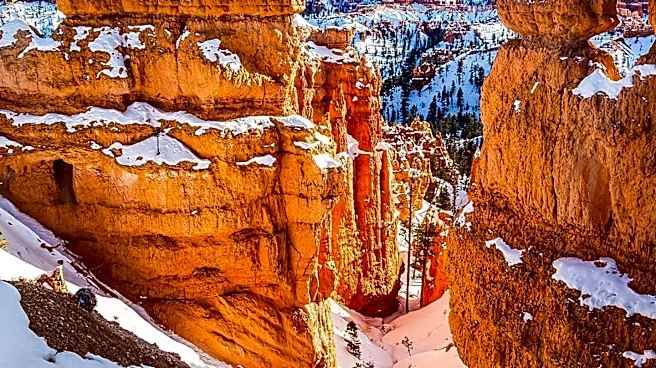
Eleven hikers were rescued and two were hospitalized after flash floods struck Bryce Canyon National Park on Monday afternoon. The Garfield County Sheriff's Office reported that the floods stranded the hikers, who were part of four separate groups, around
2:30 p.m. Fortunately, none of the individuals were swept away by the floodwaters. The county's search and rescue team, emergency medical services, and park rangers responded to the incident, with approximately 15-20 first responders assisting the hikers. After medical evaluations, two individuals showed signs of hypothermia and were transported to a hospital, while the remaining nine were released. The main trails affected by the flooding included Fairyland Loop, Navajo Loop, Queen's Garden, and Peek-a-Boo Loop. Additionally, State Route 12 in the area was temporarily closed due to the flooding but reopened by Monday night.
Why It's Important?
This incident highlights the significant dangers posed by flash floods in national parks and natural areas, particularly in regions prone to sudden, intense rainfall. The rapid onset of flash floods, as seen in Bryce Canyon, can quickly turn recreational activities into life-threatening situations, necessitating swift and coordinated emergency responses. The temporary closure of State Route 12 also underscores the potential for such events to disrupt critical infrastructure and transportation, impacting local communities and tourism. For national park visitors, this serves as a crucial reminder of the importance of monitoring weather conditions and adhering to park warnings, as even seemingly clear weather can quickly give way to hazardous conditions. The hospitalization of two hikers due to hypothermia further emphasizes the severe and immediate health risks associated with exposure to cold water during flash flood events.
What's Next?
Following the incident, park authorities and local emergency services will likely review their response protocols and public warning systems to enhance safety measures for visitors. There may be increased emphasis on educating hikers about the risks of flash floods, especially during periods of unpredictable weather. Park management might also assess the affected trails and infrastructure for any damage and implement necessary repairs or preventative measures to mitigate future risks. Visitors planning trips to Bryce Canyon National Park and similar natural areas should anticipate continued advisories regarding weather conditions and potential trail closures. Local communities and emergency services will remain vigilant, preparing for potential future flash flood events, particularly as weather patterns become more erratic.
Beyond the Headlines
The Bryce Canyon flash flood incident underscores a broader challenge faced by national parks and outdoor recreational areas across the U.S.: balancing public access with safety in increasingly unpredictable environmental conditions. As climate patterns shift, leading to more extreme weather events, the frequency and intensity of flash floods in arid and semi-arid regions like Utah may increase. This necessitates a re-evaluation of long-term land management strategies, infrastructure resilience, and public education campaigns. The incident also brings to light the critical role of well-trained and equipped search and rescue teams, whose rapid deployment can be the difference between life and death. Furthermore, it prompts a discussion on individual responsibility in outdoor recreation, urging visitors to not only be aware of immediate weather forecasts but also to understand the geological and hydrological characteristics of the areas they explore.