





What's Happening?
The National Security Agency (NSA) experienced an outage on its classified internal communications network, NSANet, on Tuesday. The agency attributed the disruption to 'scheduled routine maintenance,' stating that while some internal systems were affected,
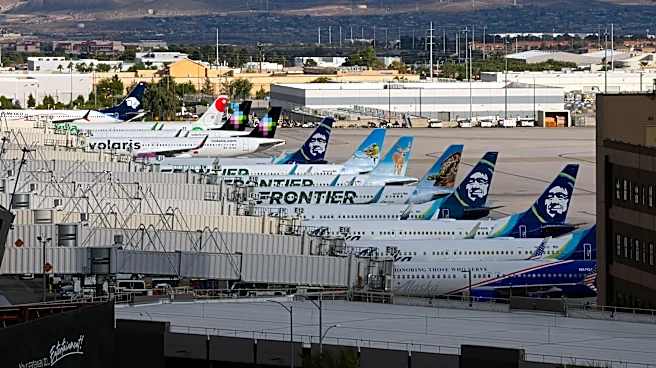
'mission-critical capabilities remain fully operational' and its ability to defend national security continues. The NSA did not provide further details on the cause or scope of the disruption. This incident is part of a series of recent technological disruptions across critical government and private sector functions, including a nationwide air traffic ground stop, a technical issue at JPMorgan Chase, an internal systems outage at United Airlines, and outages affecting Apple services. Top Trump administration national security officials, including Secretary of State Marco Rubio and Director of National Intelligence Jay Clayton, have stated there is no evidence these events are related or attributable to cyberattacks or hostile activity, instead suggesting they are distinct technical failures often linked to system upgrades and patching.
Why It's Important?
An outage on the NSA's classified network, even if due to routine maintenance, is significant due to the agency's critical role in national security, intelligence gathering, and cybersecurity. While the NSA asserts that mission-critical capabilities were unaffected, any disruption to classified communications raises concerns about potential vulnerabilities or operational impacts, however temporary. The incident occurs amidst a broader pattern of technological failures across various sectors, which, despite official assurances of no malicious intent, can create public unease and questions about the resilience of the nation's digital infrastructure. The explanation that these are isolated technical hiccups from system upgrades highlights the challenges of maintaining complex, legacy systems while integrating new technologies, a common issue across both government and private sectors. This situation underscores the constant need for robust redundancy and meticulous planning in managing critical networks.
What's Next?
The NSA will likely conduct an internal review of the maintenance procedure that led to the NSANet degradation to identify any areas for improvement in their protocols and ensure such disruptions are minimized in the future. Given the recent spate of unrelated technical issues across various critical systems, there may be broader discussions within government and industry about the challenges of system modernization and the potential for cascading effects during upgrades. While officials have dismissed the idea of a coordinated cyberattack, the frequency of these incidents could prompt increased scrutiny on infrastructure resilience and cybersecurity best practices across federal agencies and critical infrastructure sectors. The focus will remain on ensuring that essential services and national security operations are robust enough to withstand both planned maintenance and unexpected technical glitches.
Beyond the Headlines
The series of seemingly unrelated technical disruptions, including the NSA's network outage, points to a deeper systemic challenge: the aging and complex nature of digital infrastructure across the U.S. government and private sector. The need for continuous upgrades and patching, while essential for security and functionality, inherently introduces risks of temporary outages. This situation highlights the 'technical debt' accumulated over decades, where legacy systems must be integrated with newer technologies, creating intricate interdependencies that are difficult to manage. Beyond immediate operational concerns, these incidents underscore the ongoing tension between maintaining operational continuity and implementing necessary technological advancements. It also implicitly raises questions about the nation's overall preparedness for a truly widespread or coordinated cyber event, even if these recent incidents are not such. The focus on 'routine maintenance' as a cause suggests that even internal, controlled processes carry significant risks in highly sensitive environments.