
What's Happening?
The World Economic Forum (WEF) is hosting its annual meeting in Davos, Switzerland, drawing nearly 3,000 participants from business, government, and other sectors. This year's event features a record number of political leaders, including over 60 heads
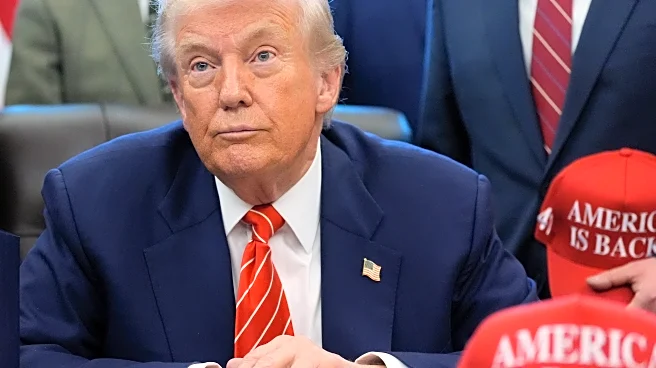
of state and government, and nearly 850 top executives from leading global companies. U.S. President Donald Trump is set to deliver a speech, accompanied by key figures such as Secretary of State Marco Rubio and Treasury Secretary Scott Bessent. The forum, founded by Klaus Schwab in 1971, has evolved into a comprehensive conference addressing issues like economic disparity, climate change, and global cooperation. This year's theme, 'A Spirit of Dialogue,' focuses on cooperation, growth, investment in people, innovation, and building prosperity. The geopolitical context is particularly complex, with discussions expected on President Trump's policies, including those on Venezuela, Greenland, and Iran, as well as the impact of artificial intelligence on jobs and innovation.
Why It's Important?
The Davos meeting is significant as it brings together influential leaders to discuss pressing global issues. President Trump's participation highlights the U.S.'s role in shaping international policies, especially amid his controversial stances on trade and foreign relations. The forum provides a platform for dialogue on critical topics like climate change and economic inequality, which have far-reaching implications for global stability and prosperity. The discussions on artificial intelligence are particularly crucial, as they address the balance between technological advancement and its impact on employment and regulation. The outcomes of these discussions could influence policy decisions and corporate strategies worldwide, affecting economic growth and social equity.
What's Next?
Following the forum, stakeholders are likely to continue discussions on the implementation of policies and strategies discussed at Davos. Governments and businesses may explore collaborations to address the challenges of climate change and economic inequality. The dialogue on artificial intelligence could lead to new regulatory frameworks aimed at balancing innovation with job protection. The forum's emphasis on cooperation and investment in people may inspire initiatives to foster inclusive growth and sustainable development. Observers will be watching for any shifts in U.S. foreign policy or trade relations as a result of President Trump's engagements at the forum.