






What's Happening?
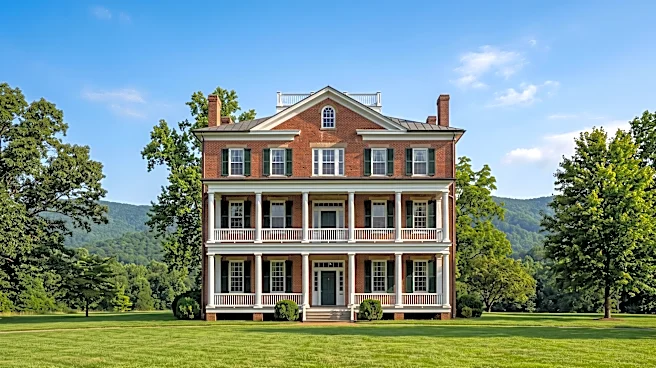
The Smith-McDowell House in Asheville, North Carolina, built in 1840, stands as a witness to nearly two centuries of American change, particularly reflecting the Gilded Age. Initially, the property was considered by George Vanderbilt for the site of his
Biltmore House before he chose a different location. The house's early owner, James Smith, an entrepreneur, built his fortune through livestock trade, and over 100 enslaved people lived and worked on the property. The house's history includes the tragic splitting of enslaved families when the property went up for auction. As Asheville grew from a small mountain town into a city, the house survived economic downturns, including the Depression, which paradoxically saved many of Asheville's historic buildings from demolition. Today, the Smith-McDowell House is part of the Asheville Museum of History, preserving the story of western North Carolina and offering a broader perspective on American history.
Why It's Important?
The Smith-McDowell House serves as a crucial historical artifact, embodying the complex narrative of American development during the Gilded Age and beyond. Its story highlights the economic growth and entrepreneurial spirit of the era, as exemplified by James Smith's business ventures. More significantly, it confronts the darker aspects of this period, particularly the institution of slavery and its profound human cost, reminding visitors of past injustices. The house's survival through rapid urbanization and economic hardship underscores the importance of historical preservation in understanding societal evolution. By being part of the Asheville Museum of History, it provides a tangible link to the past, allowing current generations to connect with the broader American story, including both its progress and its mistakes, and to appreciate the continuous transformation of communities.
What's Next?
The Smith-McDowell House, as part of the Asheville Museum of History, will continue its role in educating the public about the region's past and its connection to national history. Ongoing efforts will focus on its preservation and the accurate portrayal of its complex narrative, including the lives of the enslaved people who worked there. The house's continued existence depends on diligent care and maintenance, ensuring it remains a physical testament to historical change. As Asheville continues to develop, the house will serve as a constant reminder of the city's origins and the diverse experiences that shaped it. Its role in the 'America 250' initiative further emphasizes its importance in commemorating the nation's history and encouraging reflection on its journey.
Beyond the Headlines
The Smith-McDowell House offers a profound 'Beyond the Headlines' perspective by intertwining the architectural grandeur of the Gilded Age with the stark realities of human exploitation. The mention of George Vanderbilt's initial interest in the property juxtaposes the aspirations of industrial magnates with the existing social structures, including slavery, that underpinned much of the era's wealth. The house's survival through various historical epochs, including the Depression, highlights the resilience of physical structures as silent witnesses to societal shifts. Its current function as a museum, actively narrating the stories of both its prominent owners and the enslaved individuals, underscores a critical ethical dimension: the responsibility of historical institutions to present a complete and nuanced account of the past, acknowledging both affluence and suffering. This approach fosters a deeper understanding of how historical sites can serve as powerful tools for confronting uncomfortable truths and promoting social awareness.