



What's Happening?
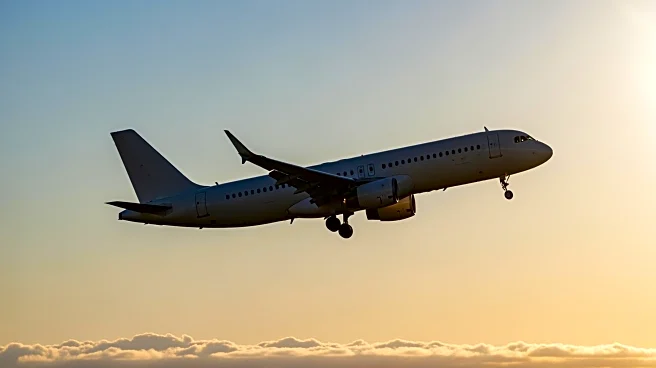
The Middle East's narrowbody aircraft utilization has shown a strong recovery, surpassing pre-pandemic levels. According to Aviation Week's Tracked Aircraft Utilization database, the number of flights in 2025 is approximately 30% higher than in 2019.
This growth is driven by an increase in the in-service fleet, including nearly 100 Boeing 737 MAX and around 200 Airbus A320neo family aircraft. The narrowbody fleet has expanded by more than a third since 2019. In contrast, the widebody market, heavily impacted by COVID-19, is still recovering but has seen a 5% increase compared to 2024.
Why It's Important?
The recovery in narrowbody utilization highlights the resilience and growth potential of the Middle Eastern aviation market. The increase in flights and fleet expansion indicates a robust demand for air travel in the region, which could have positive implications for the global aviation industry. The ongoing fleet replenishment and outstanding orderbook of over 1,600 aircraft, including nearly 1,000 widebodies, suggest continued growth in the region's aviation sector. This recovery could influence global aviation trends and impact aircraft manufacturers like Boeing and Airbus.
What's Next?
With a significant orderbook and ongoing fleet expansion, the Middle East's aviation market is poised for further growth. The region's operators are expected to continue increasing their fleet size, particularly in the narrowbody segment. This growth may lead to increased competition among airlines and could drive further innovation in aircraft technology and services. The recovery of the widebody market will also be closely monitored, as it plays a crucial role in long-haul travel and international connectivity.