







What's Happening?
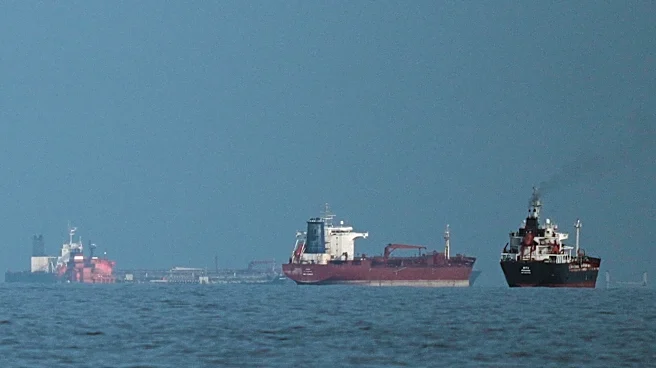
The ongoing conflict in Iran has significantly impacted global energy prices, with the Strait of Hormuz's traffic remaining over 90% below pre-war levels. This has led to rising domestic prices in the U.S., particularly in California, where the average
gas price has reached $5.89 per gallon, and diesel has hit a record $7.75. California's reliance on imported crude oil, primarily from Asia, has exacerbated the situation, as countries like South Korea and India face tight inventories due to the loss of Middle East oil. This has raised concerns about the state's energy security and economic stability.
Why It's Important?
California's energy crisis underscores the vulnerability of regions heavily reliant on imported energy supplies. The state's high fuel prices could have widespread economic implications, affecting transportation costs, consumer prices, and overall economic growth. The situation highlights the need for diversified energy sources and improved infrastructure to ensure reliable energy supply. Additionally, the crisis may prompt policymakers to reconsider energy policies and explore alternative energy solutions to mitigate future risks.
What's Next?
As the conflict in Iran continues, California may need to explore alternative energy sources and strengthen its energy infrastructure to reduce reliance on imports. Policymakers and industry leaders may also need to collaborate on strategies to stabilize energy prices and ensure long-term energy security. The situation could lead to increased investment in renewable energy and energy efficiency initiatives to reduce the state's vulnerability to global energy market fluctuations.