







What's Happening?
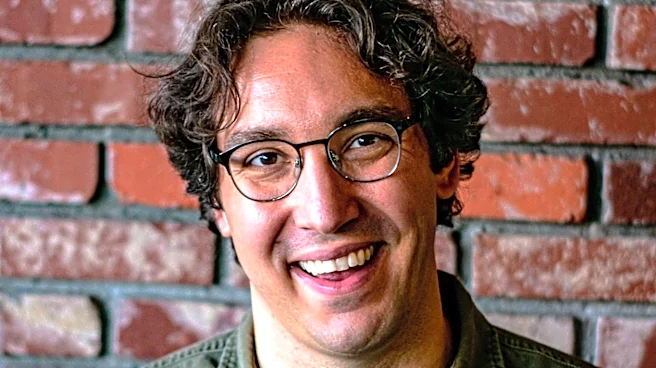
Professor Nicholas Jacobson, a psychiatry and computer science professor at Dartmouth, highlights the dual nature of AI mental health chatbots, stating that their biggest risks are also their biggest benefits: their ability to say things they haven't
been explicitly told to say. Jacobson, who developed the AI therapy chatbot Therabot, emphasizes the need for many different safety systems, consistency, and evaluation for these tools. While Therabot has shown to be safe and effective in clinical trials for depression, anxiety, and eating disorders, general-purpose AI chatbots raise concerns due to their potential for harm. Jacobson advocates for regulation around medical chatbots, noting that current legislative proposals often have exemptions that would exclude many general-purpose products being used for mental health support, despite disclaimers from large companies.
Why It's Important?
The increasing use of AI chatbots for mental health support presents a critical juncture for healthcare and technology. On one hand, these tools offer the potential to scale access to mental health resources, reaching more individuals who might otherwise lack support. Therabot's demonstrated efficacy in clinical trials suggests a promising future for specialized, clinically-overseen AI interventions. On the other hand, the inherent 'fluidity' of generative AI, where chatbots can produce unexpected responses, poses significant risks, especially in sensitive areas like mental health. Inaccurate or inappropriate advice could exacerbate mental health conditions or lead to harmful decisions. The current regulatory landscape is insufficient, as many general-purpose AI tools are being used for mental health despite not being designed or regulated for clinical purposes, creating a gap in consumer protection and accountability. This situation impacts patients, clinicians, and AI developers, necessitating a careful balance between innovation and safety.
What's Next?
The future will likely see a push for more specific and effective regulation of AI mental health chatbots. Professor Jacobson's experience with New Hampshire Senate Bill 640, which aimed to require licensed clinician review of every chatbot exchange, indicates the challenges in crafting appropriate legislation. Future regulations may focus on consumer protection laws, holding companies accountable for the functional intent and potential harms of their mental health AI therapy products, rather than treating AI as an unlicensed clinician. There will also be continued development and testing of specialized AI tools like Therabot, with ongoing clinical trials to ensure safety and effectiveness, potentially leading to their broader deployment under strict clinical oversight. Dartmouth students, for instance, will have opportunities to participate in trials for generative versions of Evergreen, a student wellness platform, to gather data on real-world efficacy and safety.
Beyond the Headlines
The emergence of AI mental health chatbots raises profound ethical and societal questions about the nature of care, empathy, and responsibility. While AI can offer accessible support, it lacks genuine human understanding and emotional intelligence, which are often crucial in therapeutic relationships. The 'fluidity' of AI responses, while potentially beneficial for personalized advice, also highlights the machine's inability to fully grasp context or nuance, which could lead to unintended consequences in mental health. This development challenges the traditional model of psychotherapy, prompting a re-evaluation of what constitutes effective mental health intervention and who or what can provide it. The long-term implications could include a shift in how mental health services are delivered, with AI potentially serving as a first line of support or a supplementary tool, but also necessitating a clear understanding of its limitations and the irreplaceable value of human connection and professional judgment in mental health care.