
What's Happening?
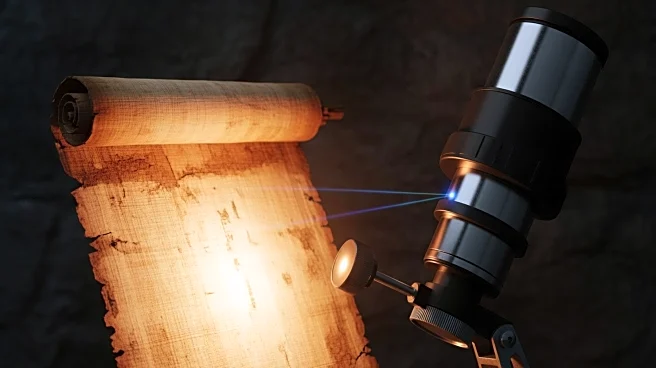
A study published in Nature examines the effects of fire on Egyptian mummies using optical and neutron vibrational spectroscopy. Researchers analyzed burned skeletal samples from mummies at the National
Museum of Brazil, revealing insights into the preservation techniques used by ancient Egyptians. The study identified various compounds used in mummification, such as natron and resins, and assessed the impact of fire on these materials. The findings provide a detailed vibrational profile of the mummies' bones, highlighting the presence of contaminants and the effects of heat-induced changes.
Why It's Important?
Understanding the preservation methods of ancient civilizations offers valuable insights into historical practices and cultural heritage. The study's use of advanced spectroscopy techniques allows for non-invasive analysis, preserving the integrity of archaeological specimens. The findings contribute to the broader field of archaeology, enhancing knowledge of mummification processes and the resilience of materials used. This research may inform conservation strategies for historical artifacts, ensuring their protection against environmental threats.
Beyond the Headlines
The study highlights the sophisticated preservation techniques employed by ancient Egyptians, reflecting their advanced understanding of chemistry and materials science. The presence of contaminants from construction materials suggests interactions between historical artifacts and modern environments, raising questions about the long-term preservation of cultural heritage. The research underscores the importance of interdisciplinary approaches in archaeology, combining science and history to uncover new insights.