








What's Happening?
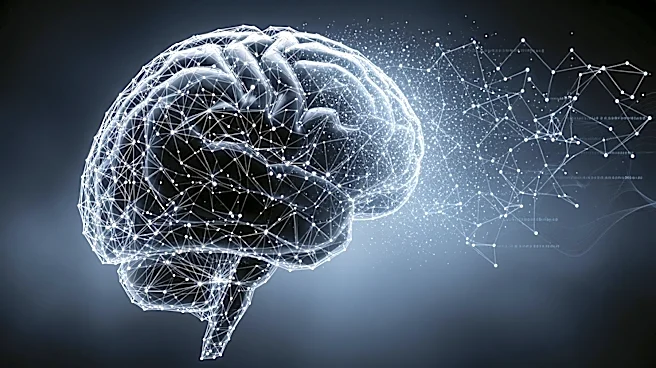
Neuroscientist Vivienne Ming has raised concerns about the potential for an AI-induced dementia crisis in the United States. According to Ming, the increasing reliance on artificial intelligence could weaken brain systems responsible for curiosity, attention,
and executive function. Her research indicates that students using AI for common tasks show a significant reduction in brain activity associated with cognitive engagement. Ming warns that this overreliance on AI could lead to a gradual decline in cognitive reserve, which is the brain's resilience against age-related decline. She highlights that while AI tools have not been around long enough to measure long-term impacts, the short-term behavioral evidence suggests a need for caution.
Why It's Important?
The potential for an AI-induced dementia crisis could have significant implications for public health and education in the U.S. If AI usage continues to grow without addressing its cognitive impacts, there could be a population-level decline in cognitive abilities. This would affect not only individual health but also workforce productivity and economic competitiveness. The warning serves as a call to action for educators, policymakers, and technology developers to consider the cognitive effects of AI and to promote balanced usage that encourages active cognitive engagement.
What's Next?
To mitigate the risks, Ming suggests using AI as an 'adversarial collaborator' that challenges users' reasoning rather than simply providing answers. This approach could help preserve cognitive reserve by encouraging critical thinking and problem-solving skills. Additionally, there may be increased advocacy for educational and policy measures that promote cognitive health in the context of AI usage. Stakeholders in technology and education sectors might explore ways to integrate AI tools that support rather than replace cognitive functions.