







What's Happening?
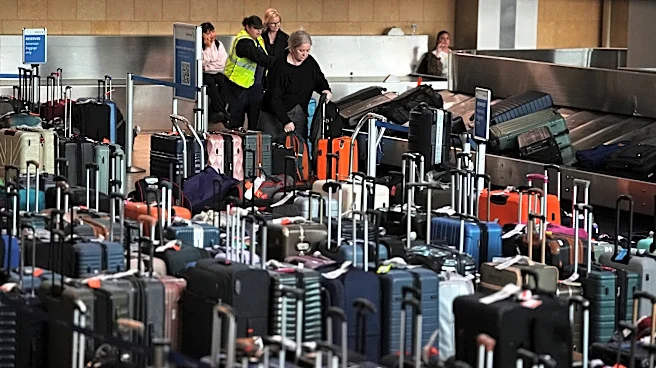
Millions of Americans recently experienced significant technological outages affecting banking, flights, email, app stores, and government services. While many found these disruptions annoying, some individuals experienced them as existential threats,
leading to a sense of dread even after services were restored. This heightened reaction is attributed to a hyper-reliance on technology, making temporary shutdowns feel like vulnerabilities. According to Psychology Today, these strong reactions are often amplified by cognitive biases such as overgeneralization, catastrophization, and discounting the positive. The anxious brain tends to link unrelated events into negative patterns, jump to worst-case scenarios, and fixate on problems while ignoring broader functionality. This phenomenon is further exacerbated by the ongoing integration of artificial intelligence (AI) into daily life, which has already unsettled many due to its rapid growth and uncertain future impact on livelihoods.
Why It's Important?
The widespread anxiety stemming from technological outages highlights a critical societal vulnerability in the U.S. economy and daily life. As infrastructure becomes increasingly digital, disruptions can have cascading effects, impacting financial stability, transportation, communication, and government operations. This reliance creates a new form of stress, where the temporary loss of access to essential services can trigger significant psychological distress, particularly for those already prone to anxiety. For businesses, these outages underscore the need for robust backup systems and contingency plans to maintain operations and customer trust. For policymakers, it emphasizes the importance of cybersecurity and resilient digital infrastructure to protect citizens and critical services from both accidental disruptions and malicious attacks. The psychological impact also points to a growing need for mental health support tailored to technology-related anxieties.
What's Next?
In the wake of these outages, there will likely be increased scrutiny on the resilience of technological infrastructures across various sectors. Companies and government agencies may invest more in redundancy measures, cybersecurity protocols, and disaster recovery plans to mitigate future disruptions. Mental health professionals are also recognizing the need to address these new subtypes of technology-related anxiety, suggesting that societal support systems will need to evolve to help individuals cope with rapid technological change and temporary loss of access. Furthermore, as AI continues to integrate into daily life, public discourse will likely focus more on managing the uncertainties and potential risks associated with advanced technologies, prompting discussions on ethical guidelines and regulatory frameworks to ensure technological advancements benefit society without causing undue stress or harm.
Beyond the Headlines
Beyond the immediate inconvenience and anxiety, these technological outages reveal deeper societal implications regarding our relationship with technology. The hyper-reliance on digital platforms has created a new baseline for daily functioning, where any disruption can feel profoundly destabilizing. This phenomenon raises questions about digital literacy, resilience, and the potential for a 'digital divide' in coping mechanisms. It also highlights the psychological toll of living in an increasingly interconnected world, where individual well-being can be directly impacted by the stability of unseen digital networks. The 'sci-fi feel' of AI's exponential growth, as noted by Psychology Today, suggests a cultural unease with technologies that feel beyond human control, potentially leading to broader philosophical debates about technological progress, human agency, and the future of society in an AI-dominated era. This could foster a greater emphasis on digital wellness and mindful technology use.