

What's Happening?
Iran's President Masoud Pezeshkian has expressed optimism about the outcome of the third round of nuclear talks with the United States, as a delegation led by Foreign Minister Abbas Araqchi heads to Geneva. The discussions aim to address the long-standing
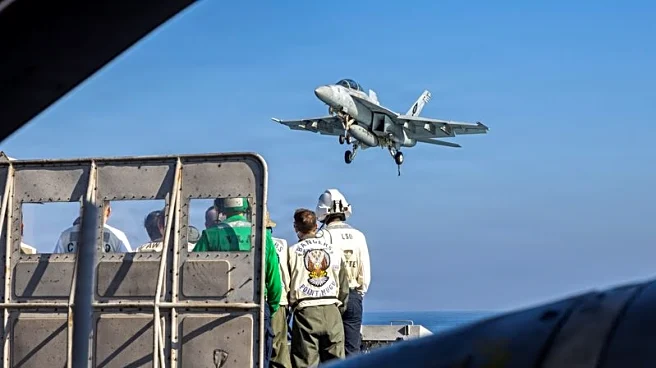
dispute over Iran's nuclear program. The U.S. delegation, including envoy Steve Witkoff and President Trump's son-in-law Jared Kushner, is set to meet with the Iranian team. The talks come as the U.S. increases its military presence in the Middle East, preparing for potential strikes on Iran, which has threatened retaliation against U.S. bases if attacked. Germany has urged Iran to cease support for proxy groups like Hamas, Hezbollah, and the Houthis, and to engage constructively in the negotiations.
Why It's Important?
The Geneva talks are crucial as they represent a potential turning point in U.S.-Iran relations, which have been strained over Iran's nuclear ambitions. A successful negotiation could lead to a de-escalation of military tensions in the Middle East, impacting regional stability and global oil markets. The outcome could also influence U.S. foreign policy and its approach to nuclear non-proliferation. For Iran, reaching an agreement might alleviate economic sanctions and improve its international standing. However, failure to reach a deal could exacerbate tensions, leading to further instability in the region.
What's Next?
The next steps involve the continuation of talks in Geneva, where both sides will attempt to reach a consensus on Iran's nuclear program. The U.S. and its allies, including Germany, will likely continue to pressure Iran to halt its support for regional proxy groups and to comply with international nuclear agreements. The outcome of these talks could influence future diplomatic engagements and military strategies in the region. Observers will be watching for any shifts in Iran's stance or changes in U.S. policy that could affect the broader geopolitical landscape.