

What's Happening?
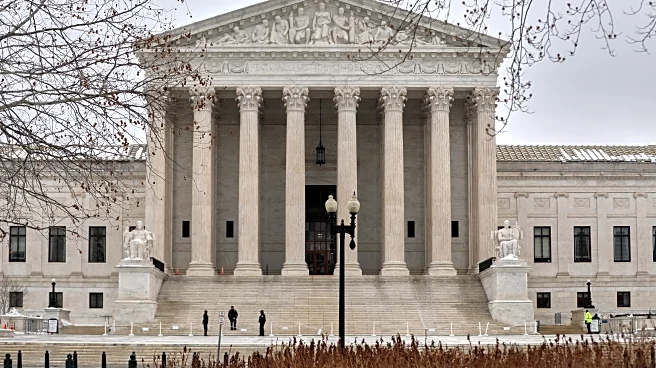
The Supreme Court has ruled that Gabriel Olivier, an antiabortion activist, can challenge a local law in Brandon, Mississippi, that restricts protests to designated areas. Olivier was arrested in 2021 for protesting outside a city amphitheater, violating
a city ordinance. He pleaded no contest and was fined and placed on probation. Olivier's lawsuit argues that the ordinance infringes on his free speech rights. Lower courts had blocked his lawsuit, citing a rule that prevents civil rights lawsuits from undermining criminal convictions. The Supreme Court's decision allows Olivier to proceed with his lawsuit, asserting that it does not affect his conviction.
Why It's Important?
This ruling underscores the ongoing tension between local regulations and constitutional rights, particularly the First Amendment. The decision could set a precedent for how free speech is protected in the context of local ordinances. It highlights the balance courts must strike between maintaining public order and safeguarding individual rights. The case may influence future legal challenges to similar laws across the country, potentially affecting how protests are regulated and the extent of free speech protections.
What's Next?
Olivier's lawsuit will proceed in the lower courts, where the constitutionality of the Brandon ordinance will be examined. The outcome could impact similar laws nationwide, prompting municipalities to reassess their protest regulations. The case may also inspire other activists to challenge restrictions they believe infringe on their rights, potentially leading to broader legal reforms.