










What's Happening?
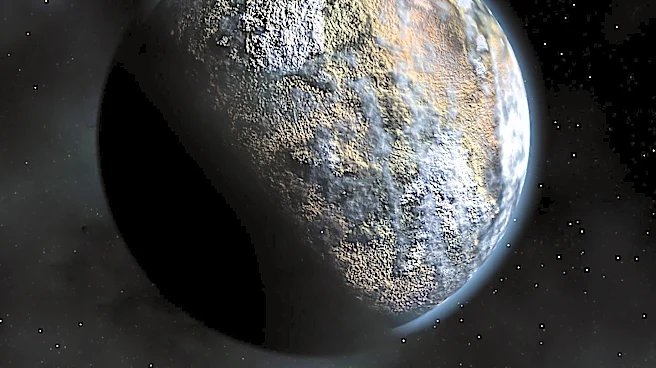
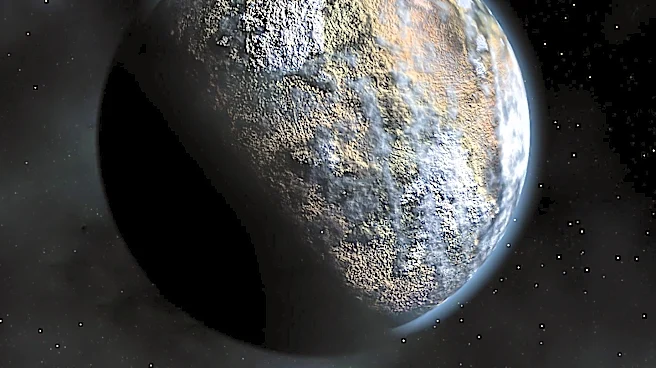
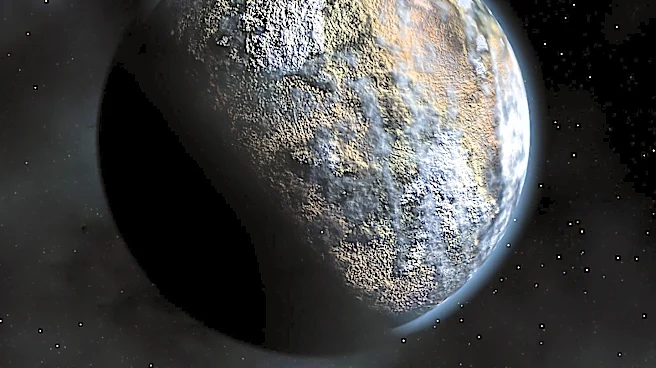
Astronomers have identified an atmosphere around the rocky exoplanet LHS 1140 b, located approximately 48 light-years from Earth in the habitable zone of its star. This discovery marks the first time an atmosphere has been detected on a rocky planet in such
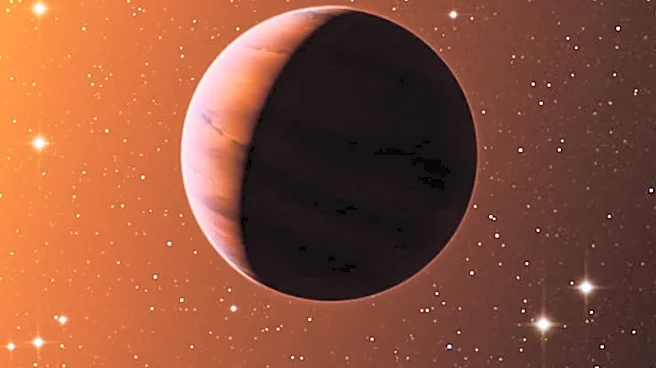
a zone, suggesting that potentially Earth-like worlds can maintain atmospheres for billions of years. The planet orbits a red dwarf star, which typically emits strong radiation that could strip away planetary atmospheres. However, LHS 1140 b has retained its atmosphere, evidenced by helium escaping from it. This finding, published in the journal Science, is based on nearly a decade of research following the planet's initial discovery in 2017. The research team, led by Collin Cherubim from Harvard University, used the WINERED spectrograph at the Magellan Observatory in Chile to confirm the presence of helium in the planet's atmosphere.
Why It's Important?
The detection of an atmosphere on LHS 1140 b is a significant milestone in the search for extraterrestrial life, as an atmosphere is a crucial factor for habitability. This discovery suggests that rocky planets orbiting red dwarf stars, which are common in the galaxy, might be capable of sustaining atmospheres despite harsh stellar conditions. The presence of an atmosphere increases the likelihood of liquid water, a key ingredient for life as we know it. This finding broadens the scope of planets that could potentially support life, providing new targets for future astronomical studies. It also challenges previous assumptions about the habitability of planets around red dwarf stars, which are often considered inhospitable due to their intense radiation.
What's Next?
Future research will focus on determining the composition of LHS 1140 b's atmosphere and whether it contains other gases that could support life. Scientists will also investigate the presence of liquid water or oceans on the planet's surface. These studies will help refine our understanding of the planet's environment and its potential to support life. The discovery also encourages further exploration of other rocky planets in the habitable zones of red dwarf stars, as they may also possess atmospheres capable of sustaining life. This could lead to a broader understanding of the conditions necessary for life beyond our solar system.
Beyond the Headlines
The discovery of an atmosphere on LHS 1140 b highlights the resilience of planetary atmospheres in the face of intense stellar radiation, suggesting that life-supporting conditions might be more common than previously thought. This finding could influence the criteria used to identify potentially habitable exoplanets, shifting focus towards planets orbiting red dwarf stars. Additionally, the research underscores the importance of advanced observational techniques and international collaboration in the field of exoplanetary science, paving the way for future discoveries that could reshape our understanding of life in the universe.