





What's Happening?
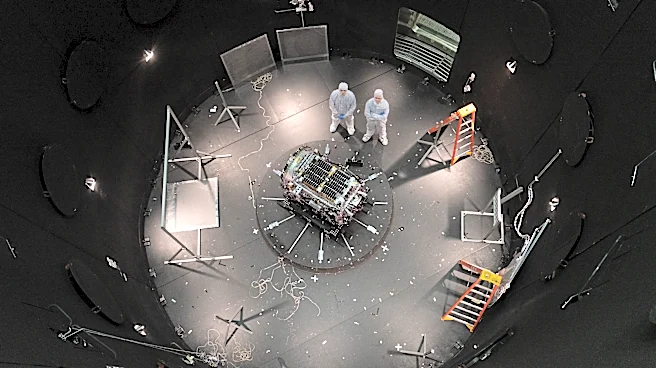
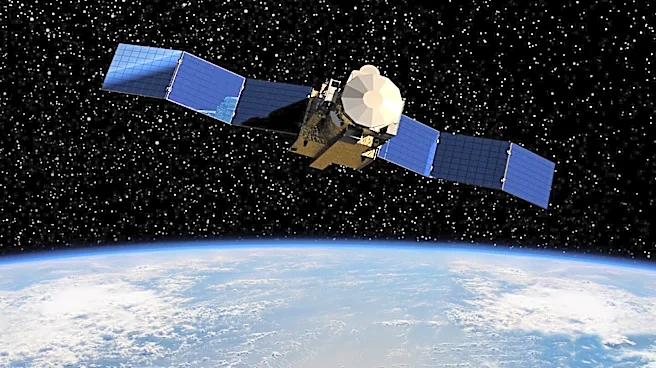
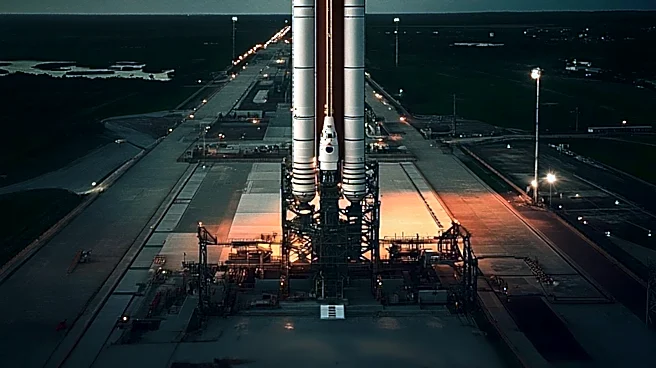
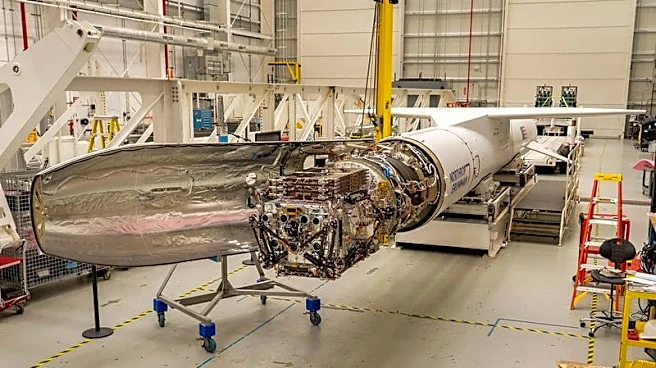
A rescue mission has been launched to save NASA's Swift Observatory, which is at risk of crashing back to Earth due to its decreasing orbit. The mission involves a three-armed spacecraft, launched by Northrop Grumman from the Marshall Islands, tasked
with capturing and boosting the telescope's altitude. The Swift Observatory, launched in 2004, is currently orbiting 224 miles above Earth but is losing altitude due to increased atmospheric drag from solar activity. The mission aims to raise the telescope's orbit by 150 miles to extend its operational life, allowing it to continue its work in tracking cosmic phenomena such as gamma-ray bursts.
Why It's Important?
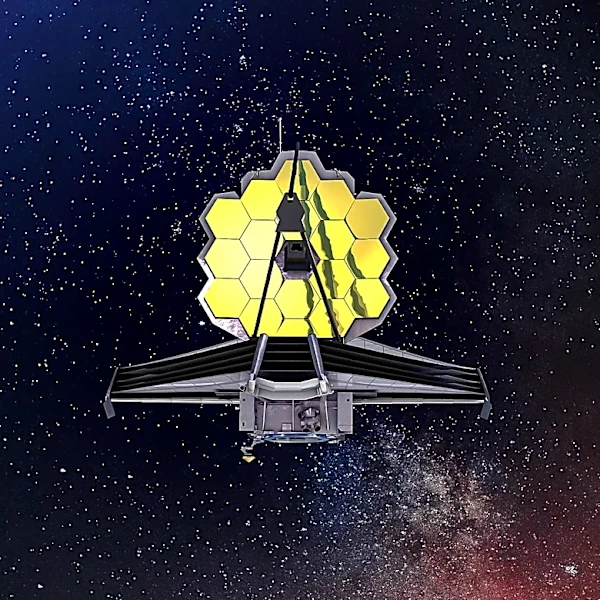
This mission is crucial for preserving the Swift Observatory's ability to contribute to astronomical research. The telescope plays a vital role in observing some of the universe's most energetic events, and its loss would be a significant setback for space science. The operation also demonstrates the challenges and complexities involved in maintaining space assets, especially as they age and face environmental threats. Successfully boosting Swift's orbit could set a precedent for future missions to extend the life of other space telescopes, such as the Hubble, which faces similar challenges.
What's Next?
If the mission is successful, Swift could resume its scientific observations by September. The operation's outcome will be closely monitored by NASA and the scientific community, as it may influence future decisions regarding the maintenance and extension of other space observatories. The mission's success could also encourage further investment in technologies designed to service and sustain aging space infrastructure, ensuring the continued flow of valuable scientific data.